Understanding Common GERD Diet Triggers

Written by: Sarah Glinski, RD
Updated: November 5th, 2026
Approximately 1 in 6 Canadians live with gastroesophageal reflux disease (GERD), and often, the first thing they’re told to do is eliminate a long list of foods. But while certain foods can trigger symptoms, there’s no universal “GERD diet.” Instead, learning your own triggers is often more effective (and sustainable) than unnecessary restriction of many different foods.
This article will review why certain foods can trigger GERD symptoms, some of the most common GERD diet triggers, and provide strategies for managing GERD without avoiding all your favourite foods.
Why Can Food Trigger GERD Symptoms?
Different foods can affect GERD in different ways, but some of the most common reasons that some foods worsen GERD symptoms include:
- Increasing stomach acid production: Foods that trigger stomach acid secretion can worsen heartburn because they increase the amount of acid in the stomach.
- Delaying stomach emptying: Certain foods, such as high-fat foods, delay stomach emptying. This causes food and acid to stay in the stomach for too long, which can lead to increased stomach pressure and relaxation of the lower esophageal sphincter (LES). The combined result is stomach contents (including acid) flowing back into the esophagus.
- Irritating an already inflamed esophagus: Certain foods, such as spicy foods, may irritate the esophagus, making heartburn feel more intense.
- Increasing stomach pressure: Large meals increase stomach pressure, which can force stomach acid into the esophagus.
- Relaxing the lower esophageal sphincter (LES): Foods such as caffeine, fatty meals, and large meals relax the LES, letting acid escape back into the esophagus.
However, it’s important to note that not every food affects every person the same, and research on many trigger foods has had mixed results.
Common GERD Diet Triggers
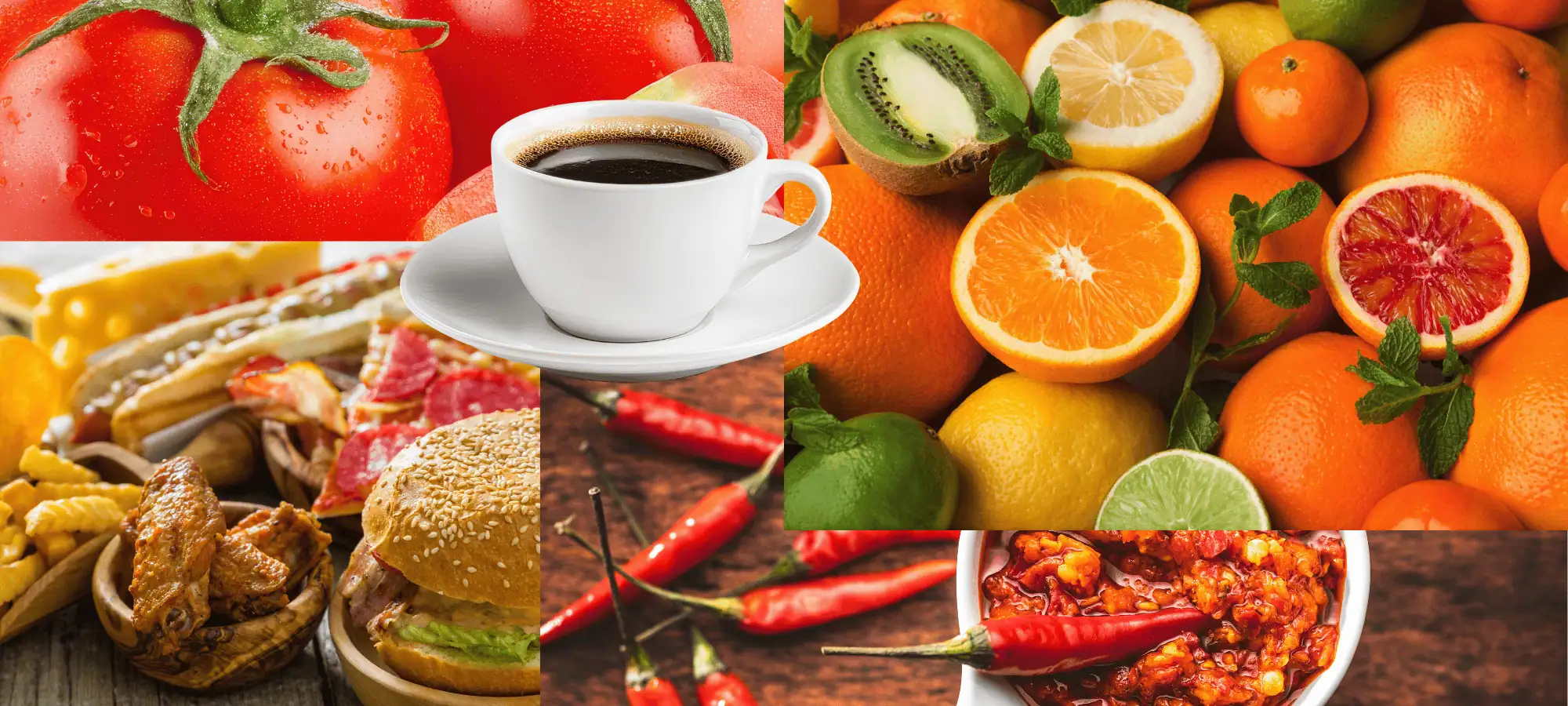
Below, we’ll review some of the most common GERD diet triggers and explain why they can increase heartburn. Keep in mind that this is a list of common triggers, not guaranteed triggers.
High-Fat Foods
High-fat foods can trigger GERD symptoms because they delay stomach emptying. This can cause prolonged increased stomach pressure, which relaxes the LES and causes acid to escape back up into the esophagus
Examples include:
- Fried foods
- Pizza
- Fatty cuts of meat
- Creamy sauces
- High-fat dairy products
Spicy Foods
While spicy foods don’t necessarily cause acid to escape into the esophagus or relax the lower esophageal sphincter, they may worsen symptoms by directly irritating an already-inflamed esophagus.
Examples include:
- Hot wings
- Hot sauce/sriracha sauce
- Chili pepper
- Jalapenos
- Wasabi
- Horseradish
- Curries
- Chilis
Citrus Fruits and Tomatoes
Since citrus fruits and tomatoes are more acidic than other fruits and vegetables, and like spicy foods, they may directly irritate an already-inflamed esophagus.
Examples include:
- Oranges
- Grapefruit
- Tangerines
- Lemons
- Limes
- Tomato sauce
- Canned tomatoes
- Tomato paste
Coffee and Caffeine
There are a few reasons why coffee can trigger heartburn in some people:
- Acidity: Coffee is naturally acidic, which can irritate an already-inflamed esophagus.
- Stomach acid production: Coffee can trigger stomach acid production, which can increase the likelihood of acid reflux
- LES relaxation: Caffeine can relax the LES, making it easier for stomach acid to escape back into the esophagus.
- Stomach volume: If you drink large amounts of coffee, the large volume of liquid in your stomach can increase stomach pressure, which can relax the LES and increase the chance of stomach acid escaping into the esophagus.
- Add-ins: Adding large amounts of coffee creamer (which is high in fat) can trigger heartburn in people who are sensitive to high-fat foods.
Chocolate
Chocolate contains caffeine and cacao, which may relax the LES. However, research findings are inconsistent, so instead of cutting it out altogether, tracking your food intake and heartburn symptoms can be a helpful way of identifying which foods are the issue.
Carbonated Beverages
Carbonated beverages (like pop, sparkling water, and beer) introduce extra gas into the stomach, which can cause bloating and increase stomach pressure. Some research suggests that these drinks can worsen symptoms, likely because this increase in stomach pressure pushes stomach acid into the esophagus.
The Impact of Eating Habits on Heartburn
Luckily, evidence suggests that changing your eating habits rather than completely eliminating all the common trigger foods can be helpful. Eating habits such as large meals, eating too quickly, eating close to bedtime, skipping meals, and late-night snacking can all trigger heartburn, so modifying these factors before eliminating foods may be enough to help you manage your heartburn.
Identifying Your Personal GERD Triggers
Since every person has different triggers, the best way to identify yours is to keep a food and symptom journal to see if there’s any relationship between certain foods, portion sizes, and heartburn symptoms.
If you suspect certain foods are triggering your GERD, you may wish to temporarily eliminate them and evaluate whether this improves your symptoms. If your symptoms improve, reintroduce foods one at a time to see which specific food was the main trigger.
Tips for Managing GERD Without Over-Restricting Your Diet
It is recommended to eat as varied a diet as possible while managing your symptoms. Different foods give you different nutrients, so over-restricting your diet may mean you’re missing out on important nutrients.
Here are some evidence-based recommendations for managing GERD without over-restriction.
Eat Smaller, More Frequent Meals
Eating large meals increases stomach pressure, which relaxes the LES and can push stomach acid into your esophagus, causing irritation. Instead of eating three large meals per day, try eating five to six smaller meals spread evenly throughout the day. This reduces the amount of pressure in your stomach and may help keep heartburn at bay.
Eat Slowly and Mindfully
Some research shows that eating too quickly can trigger GERD symptoms. Instead of rushing through your meals, take the time to eat slowly and appreciate the taste, smell, and texture of your food.
Change How You Drink Coffee
If completely cutting out coffee isn’t an option, there are other ways you can reduce its impact on your symptoms. Try:
- Choosing lower-fat add-ins: Switch from full-fat creamer to a lower-fat alternative if high-fat foods are a trigger for you.
- Switch to decaf: If you’re drinking coffee for the flavour rather than the caffeine, switching to decaf can help.
- Reduce the amount you drink: If you’re drinking coffee by the pot rather than by the cup, simply cutting back on the amount may be helpful.
Avoid Eating 2-3 Hours Before Lying Down
Lying down after eating changes the angle of your stomach in relation to your esophagus, allowing stomach acid to escape back into the esophagus. Try to wait at least two to three hours after eating before lying down to give the food and stomach acid a chance to empty from your stomach.
Use a Wedge Pillow
If you experience GERD symptoms at night, elevating the head of your bed or using a wedge pillow can help prevent acid from entering the esophagus by changing the angle of the stomach in relation to the esophagus.
Increase Fibre Intake
Research shows that people who eat more fibre tend to have fewer heartburn symptoms. It’s unclear why this is, but since fibre has many health benefits beyond reducing heartburn, adding more to your diet is a great goal to have.
Here are some simple strategies to increase your fibre intake:
- Add berries to your yogurt or oatmeal
- Make chia pudding
- Add lentils to spaghetti sauce
- Add chickpeas to curries
- Add beans to chilis
- Choose high-fibre or legume-based pasta over refined wheat pasta
- Switch to whole wheat bread
- Add a scoop of psyllium husk to your smoothie
When increasing your fibre intake, it’s important to start low and go slow and drink lots of water to reduce the likelihood of side effects like gas and bloating.

Common GERD Triggers Patient Reel by Sarah Glinski
When to Consult a Healthcare Provider
While diet and lifestyle changes can be helpful for managing GERD, symptoms that are persistent and negatively impact your day-to-day life should be investigated.
Talk to a healthcare provider if you have:
- Heartburn symptoms several times a week
- Symptoms that affect your sleep
- Symptoms that no longer respond to diet, lifestyle, or over-the-counter treatments
- Difficulty or pain with swallowing
- A persistent cough
- Chest pain
- Unintentional weight loss
These symptoms may mean you need prescription medication or further testing to rule out complications like Barrett’s Esophagus, a condition where the tissue lining your esophagus changes to become more like the lining of your intestine. It is linked with a higher risk of developing esophageal cancer, and people with GERD are more likely to develop Barrett’s Esophagus.
Final Thoughts
While many people are often told to eliminate a long list of foods to manage GERD, no single food is guaranteed to trigger symptoms in every person with GERD. Instead, it’s important to find your own personal triggers, combining diet changes with lifestyle changes like eating smaller meals, increasing fibre intake, and not lying down immediately after eating.
Key Messages
- There is no universal GERD diet that works for everyone, but foods like high-fat meals, spicy foods, caffeine, and carbonated beverages commonly trigger symptoms in some people.
- A combination of individualized diet and lifestyle changes can help reduce symptoms while ensuring you get the nutrients you need.
- If symptoms are frequent, worsening, or interfering with daily life, it’s important to speak with your healthcare provider.
This resource was made possible due to an unrestricted educational grant from Viatris.

References
- Canadian Digestive Health Foundation (n.d.). GERD. Retrieved August 6, 2026, from https://cdhf.ca/en/digestive-conditions/gerd/
- Fox, M., & Gyawali, C. P. (2023). Dietary factors involved in GERD management. Best Practice & Research Clinical Gastroenterology, 62-63, 101826. https://doi.org/10.1016/j.bpg.2023.101826
- Alqahtani, N. S. (2025). The Effectiveness of Dietary Intervention in Managing Gastroesophageal Reflux Symptoms: A Prospective Study. Journal of Pioneering Medical Sciences, 14(6), 154-162. https://doi.org/10.47310/jpms2025140621
- Newberry, C., & Lynch, K. (2019). The role of diet in the development and management of gastroesophageal reflux disease: Why we feel the burn. Journal of Thoracic Disease, 11(Suppl 12), S1594. https://doi.org/10.21037/jtd.2019.06.42
- Iriondo-DeHond, A., Uranga, J. A., & Abalo, R. (2020). Effects of Coffee and Its Components on the Gastrointestinal Tract and the Brain–Gut Axis. Nutrients, 13(1), 88. https://doi.org/10.3390/nu13010088
- Canadian Digestive Health Foundation (2025, November 13). GERD Symptoms at Night: Why Acid Reflux Gets Worse When You Sleep. Retrieved August 6, 2026, from https://cdhf.ca/en/gerd-symptoms-at-night-why-acid-reflux-gets-worse-when-you-sleep/
- NIH (2024, August 1). Barrett’s Esophagus. National Institute of Diabetes and Digestive and Kidney Diseases. Retrieved August 6, 2026, from https://www.niddk.nih.gov/health-information/digestive-diseases/barretts-esophagus/all-content







Low FODMAP Diet: Dietitian Tips for Getting Enough Fibre


Low FODMAP Diet: The Traditional vs. Modified Approach


Low FODMAP Smoothie Options





High FODMAP Foods and Tips for Enjoying them with IBS

Understanding the Low FODMAP Diet: Foods, Phases and Tips for Managing IBS


The Important Role of Diet in IBS Management


Plant-Based Eating & the FODMAP Diet


Low FODMAP Fast-Food Meals