Understanding IBS-D (IBS with Diarrhea)

Written by: Jessica Roocroft, RD
Updated: March 31st, 2025
Irritable Bowel Syndrome with Diarrhea, or IBS-D,is a subtype of Irritable Bowel Syndrome (IBS) characterized primarily by frequent diarrhea, along with abdominal pain, bloating, and urgency.
Approximately 1 in 7 people are affected by IBS, and about one third of all cases are IBS-D.
How is IBS-D Diagnosed?
Diagnosing IBS-D isn’t simple, unfortunately- There’s no single test for it.
Before diagnosing IBS-D, your healthcare provider (Doctor, Nurse Practitioner, or Gastroenterologist) will consider your health & family history, potential red flags (like fever, anemia, blood in the stool, and unintentional weight loss) among others.
Before making any diet changes,when you experience digestive issues like diarrhea, please ensure you’re screened for Celiac Disease. This is a blood test called an IgA-tTg.
If all is clear from the tests your doctor orders, the Rome IV criteria comes next, which is recurrent belly pain at least one day a week in the last 3 months (and it’s been happening for at least 6 months) plus at least two of the below:
- Pain related to pooping
- Changes in how often you have bowel movements
- This is called stool “frequency”
- Changes in the form of your stool, like being too hard or too watery
- This is called stool “consistency”
What should happen next is your Dr. advising you of your IBS Subtype (which can be key to sourcing the most relevant IBS information for your particular set of symptoms).
You may be assigned IBS-D as your subtype after meeting the above criteria for IBS, plus:
- More than 25% of your abnormal poops are loose or watery (Type mushy type 6’s or water type 7’s according to the good ol’ Bristol Stool Chart) AND
- Less than 25% of your abnormal poops are constipation-like (hard, dry and/or lumpy. These are Type 1’s or 2’s)

What is IBS-D, really?
IBS-D, and IBS in general, is now classified as a Disorder of the Gut Brain Interaction (a DGBI, for short).
This is where the “wiring” has gone faulty between your gut, the nerves wrapped around your gut, and your brain, which can manifest in some changes, including:
- Altering the sensitivity of your gut’s nerves
- People with IBS may experience more pain or discomfort in their digestive system than others would from the same amount of gas, bloating or pooping.
- The technical term for this is “visceral hypersensitivity”
- People with IBS may experience more pain or discomfort in their digestive system than others would from the same amount of gas, bloating or pooping.
- Changes in your gut microbiota (the types and amounts of “gut bugs” residing in your intestines)
- Usually these changes are not for the better
- Some of these gut bugs can alter several processes in the gut, like how well we can break down dietary histamines.
- Speeding up or slowing down the pace at which food is moved through the digestive tract
- In IBS-D we get the former, leading to bouts of diarrhea because water gets dragged into the gut (thanks to certain foods and/or FODMAPs), and/or poop just doesn’t stay in us long enough to “dry out” towards the end of the gut.
Diet Tips for IBS-D
Eating with IBS-D is like navigating a food minefield. Here are some tips:
Limit coffee & caffeine
- Coffee contains caffeine and chlorogenic acid (a naturally occurring plant chemical) which speeds up the gut, and those with IBS-D don’t need help in that department
- Even decaf houses chlorogenic acid which stimulates the gut’s muscles- but at a smaller extent compared to the full duo in regular coffee
- Swap to decaf- but if that makes you want to throw a temper tantrum, consider half caf, or seeing if espresso-based drinks work better.
- Compared to drip coffee, espresso based drinks, mL for mL have a smaller load of both caffeine and chlorogenic acid
Temporarily reducing large servings of fibre or large helpings of fructose-rich foods like salads and big smoothies
Healthy? Certainly. However, large salads and smoothies can draw water into the bowel, which may exacerbate the symptoms of IBS-D, leading to increased bowel motility. Try side salads instead, and smaller sized smoothies (about the size of your fist) It’s important to add IBS-D friendly foods to offset decreasing any foods like salads and smoothies.
For example: add a hard boiled egg if reducing the smoothie size at breakfast for example, or add a slice of sourdough bread and boost the protein in your salad to offset decreasing the greens
Chew your food thoroughly
Smaller particle size can help reduce the “bulk” in the gut. This can help reduce the fluid your gut wants to add in when it senses large chunks of food present. Chewing well, in other words, can help reduce diarrhea.
Try low FODMAP food “swaps” to minimize symptoms (with the guidance of an experienced Dietitian)
More on this below! Or you can check out Jessica Roocroft, RD’s free IBS-D Mini Guide
This for That: My Top Low FODMAP Swaps
Here are the FODMAP subgroups with a few of the highest FODMAP food examples of each (and what you can swap them for)!
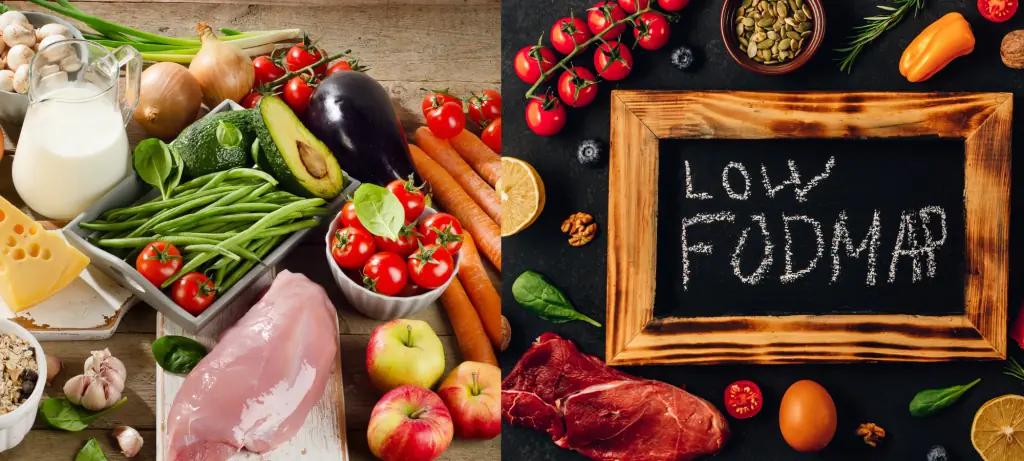
Fructans
Like in garlic, shallot, onion, regular bread, and certain nuts, even in small amounts, like cashews and pistachios
Low FODMAP swaps for these: Garlic infused oil, green onion (green parts only), onion infused oil, sourdough bread, peanuts, pecans, walnuts
GOSs
Mainly found in beans, peas, legumes/pulses.
Low FODMAP swaps for these: Butter beans, cannellini beans, and lentils (all canned, strained, and rinsed!), extra firm tofu, drained and pressed
Lactose
Found in “wet” dairy (milk, yogurt, cottage cheese, etc, unless its labeled “lactose-free”)
Low FODMAP swaps for these: lactose-free milk, lactose-free yogurt, lactose free cottage cheese, almond milk, rice milk/
Tip: “Dry” dairy like feta, cheddar, parmesan, etc, are low FODMAP as lactose is essentially zero
Fructose
Apples, pears, mangoes, honey
Low FODMAP swaps for these: Oranges, blueberries, pineapple, cantaloupe, maple syrup
Sorbitol
Blackberries, stone fruits, like apricots, prunes & prune juice, and often found in “low” or “no sugar added sweets”
Low FODMAP swaps for these: Blueberries, just ripe banana (no brown spots), passion fruit, papaya, lemonade, sweets made with regular sugar
Mannitol
All mushrooms pretty much (except the one below!), cauliflower, celery
Low FODMAP swaps for these: Oyster mushrooms, broccoli florets, bok choy (the stems make a great sub for celery)
Best Apps for the Low FODMAP Diet
Without a good set of apps (and working with a Registered Dietitian who is knowledgeable about IBS), one’s head would probably explode with the nuances of the Low FODMAP Diet.
Monash App
Great for looking up whole food sources of FODMAPs.
FODMAP Friendly App
They have a new feature where you can input foods and assess for “FODMAP stacking”.
Spoonful App
This one is great for scanning foods in a package with a barcode when you just need the red, yellow, or green light as to whether its likely low FODMAP (or not).
Supplement Tips for IBS-D
Supplements can be a trusty sidekick in managing IBS-D:
- Soluble Fibre
- Soluble fibre like acacia senegal or partially hydrolyzed guar gumcan form bowel movements
- 100% Acacia senegal is by far the favourite for diarrhea due to its ability to form bowel movements that would otherwise be overly loose.
- Soluble fibre like acacia senegal or partially hydrolyzed guar gumcan form bowel movements
- Enteric-coated peppermint oil capsules
- May ease abdominal pain and sensations like bloating when taken 60 minutes before a meal
- FODMAP-digesting enzymes can increase food freedom.
- Enzyme blends that contain fructan hydrolase, lactase and alpha-galactosidase taken with meals containing certain high FODMAP foods can help increase food freedom.
- Probiotics – The composition of an IBS patients’ microbiota (gut bacteria) can vary significantly between someone with IBS Constipation compared to IBS Diarrhea. Probiotics may be trialed if there is a strain that has evidence that it can improve your particular symptoms, specifically for your subtype of IBS/primary bowel habit. Speak with their healthcare professional to ensure the right strain and dose is selected for their IBS subtype.
Medications for IBS-D
- Rifaximin, a non-absorbable (and rather expensive) antibiotic, can be useful
- See the notes on SIBO in IBS-D below!
- Eluxadoline is a medication that slows down gut movement, reduces cramping and urgency after meals
- With this medication, there are risks such as pancreatitis, for example
- It also not for certain groups of people, including those who do not have a gallbladder, or those who drink more than 3 alcoholic drinks per day
- Tricyclic antidepressants (TCA’s) may help with abdominal pain-but depending on the dose and the person, there are plenty of side effects you may want to discuss with your Dr.
- For some IBS-D patients, bile acid diarrhea is a driver, and these folks may do well on bile acid sequestering medication (see below section on BAM)
With most IBS warriors, “multimodal care” works best- meaning that one combines diet, psychological, medication and other relevant steps to feel their best level of symptom relief. Since everyone is different, it’s important to work with your doctor to determine what is best for you!
Addressing the Gut-Brain Interaction
Since IBS is now classified as a disorder of the gut-brain interaction (a DGBI), treatment options benefit at targeting this.
Gut Directed Hypnotherapy (GDH) addressed the faulty signals of the gut-brain axis causing the gut to move too slow (or too fast).
There are apps that can help with this, and the effects can last long term.

What IBS-D is Not
IBS-D is not the same as other conditions, even if they share similar symptoms.
Conditions like celiac disease, lactose intolerance, microscopic colitis, IBD, or pancreatic insufficiency need to be ruled out, to name a few.
However, there are “Layers” that someone can have in addition to their IBS-D, or that are masquerading as IBS-D, when someone in fact does not have IBS-D
Common “Layers” (or Masqueraders) of IBS-D
This list is not exhaustive, but here are some tricksters that can hand in hand with IBS-D, or occur all on their own and look like IBS-D:
Histamine Intolerance
What it is: When our body’s enzyme called DAO isn’t cutting it in order to keep on top of breaking down dietary histamine.
Histamine intolerance occurrences in IBS are fuzzy, but the estimated figure may be around 58%– which is quite an impressive number, right?!
Histamine can be increased in the body when:
- Alcohol is consumed: This is the most common culprit- especially wine
- Certain medications are taken
- Certain foods and beverages are consumed- in particular older (non-super fresh) protein sources- like leftovers, or meals prepped far in advance!
- Certain bacteria are overgrowing in the gut (such as in SIBO or ISO)
- and/or when we consume varying amounts of both naturally occurring (or manufactured) food chemicals, like salicylates, glutamates, amines, artificial colours, natural colours such as a annatto, preservatives such as sorbates, benzoates, sulfites, nitrates, nitrites, propionates, antioxidants, glutamate or MSG, and/or other “flavor enhancers”
Small Intestinal Bacterial Overgrowth (SIBO) or Intestinal Sulphide Overproduction (ISO)
What it is:
- Too many “gut bugs” (aka: gut microbes) in the intestines, and
- Too many of certain kinds of gut bugs growing in the intestines, like sulphide gas producers in the case of ISO, and/or
- In the case of SIBO: Too many gut bugs growing in the small intestine specifically (when the bulk of our gut microbes should stay put in the large intestine)
*There is also IMO, but this is far more common in constipated folks!
Gut microbiota imbalances like these are estimated to occur in about 50% of those with IBS-D. This is why rifaximin, a special type of antibiotic, is often prescribed.
Genetic Sucrase Isomaltase Deficiency:
What it is: The inability to break down the sugar “sucrose” and starches (found in foods like grains or potatoes), to varying extents.
Did you know: GSID occurs in an estimated 30-35% of people with IBS-D!
Those with IBS-D may have other sugar/polyol intolerances such as fructose, lactose, sorbitol, mannitol, erythritol, xylitol, lactitol, maltitol- however, these sugars/polyols are largely reduced on the Low FODMAP Diet, and patients would be expected to feel better.
If someone in my practice is non-responsive or only partly responsive to Low FODMAP, and has diarrhea flare-ups after consuming sweet or starchy foods, this can be one we may explore.
Warning! Before even considering exploring this very restrictive diet for sucrase isomaltase deficiency, please ensure the Low FODMAP Diet was followed correctly first!
Bile Acid Malabsorption (BAM)
What it is: Bile acids are made in the liver, and squirted out post meal by your gallbladder, with the job of helping your body digest and absorb dietary fats properly in the “aqueous” or water-based environment of the intestine.
These bile acids are meant to be reabsorbed in the last section of your small bowel (the ileum)- but in BAM, too many bile acids escape into the large bowel.
This irritates the lining of your large bowel, which ushers in water and makes particularly urgent, loose bowel movements a part of someone’s day-to-day living without rhyme or reason.
BAM occurs in: 25-30% of people with IBS-D- that is a lot!
This is why some folks with IBS-D may experience diarrhea relief from medications called Bile Acid Sequestrants (BASTs).
Final Thoughts
Dealing with IBS-D (effectively) involves recognizing it as a Disorder of the Gut-Brain Interaction (a DGBI) and using a “multimodal approach”:
A mix of a few key and specifically IBS-D targeted dietary tweaks, supplements (sometimes medication) and gut-brain therapies.
Here are a few key takeaways:
- IBS-D is a DGBI with potentially more than one “layer” which involves frequent diarrhea and abdominal discomfort
- Diagnosis requires ruling out other conditions that may also cause diarrhea
- A well planned and Dietitian guided low FODMAP diet can help manage symptoms
- Supplements like soluble fibre, peppermint oil, and FODMAP targeted enzymes can be beneficial
- Additional medications and/or dietary tweaks may be considered for some individuals; especially those with suspected BAM, SIBO, GSID or Histamine Intolerance “layers” to their story
For more insights, consult trusted medical resources or a registered dietitian who practices in the IBS space.
References:
- Amitriptyline at Low-Dose and Titrated for Irritable Bowel Syndrome as Second-Line Treatment in primary care (ATLANTIS): a randomised, double-blind, placebo-controlled, phase 3 trial
Ford, Alexander CFord, Alexander C. et al.
The Lancet, Volume 402, Issue 10414, 1773 – 1785 - Peters SL, Gibson PR, Halmos EP. Smartphone app-delivered gut-directed hypnotherapy improves symptoms of self-reported irritable bowel syndrome: A retrospective evaluation. Neurogastroenterol Motil. 2023 Apr;35(4):e14533. doi: 10.1111/nmo.14533. Epub 2023 Jan 20. PMID: 36661117.
- Lacy BE, Cangemi D, Vazquez-Roque M. Management of Chronic Abdominal Distension and Bloating. Clin Gastroenterol Hepatol. 2021 Feb;19(2):219-231.e1. doi: 10.1016/j.cgh.2020.03.056. Epub 2020 Apr 1. PMID: 32246999.
- Villanueva-Millan MJ, Leite G, Wang J, Morales W, Parodi G, Pimentel ML, Barlow GM, Mathur R, Rezaie A, Sanchez M, Ayyad S, Cohrs D, Chang C, Rashid M, Hosseini A, Fiorentino A, Weitsman S, Chuang B, Chang B, Pichetshote N, Pimentel M. Methanogens and Hydrogen Sulfide Producing Bacteria Guide Distinct Gut Microbe Profiles and Irritable Bowel Syndrome Subtypes. Am J Gastroenterol. 2022 Dec 1;117(12):2055-2066. doi: 10.14309/ajg.0000000000001997. Epub 2022 Sep 6. PMID: 36114762; PMCID: PMC9722381.
- Shah A, Ghoshal UC, Holtmann GJ. Unravelling the controversy with small intestinal bacterial overgrowth. Curr Opin Gastroenterol. 2023 May 1;39(3):211-218. doi: 10.1097/MOG.0000000000000928. Epub 2023 Mar 1. PMID: 37144539.
- Onana Ndong, P., Boutallaka, H., Marine-Barjoan, E., Ouizeman, D., Mroue, R., Anty, R., Vanbiervliet, G. and Piche, T. (2023), Prevalence of small intestinal bacterial overgrowth in irritable bowel syndrome (IBS): Correlating H2 or CH4 production with severity of IBS. JGH Open, 7: 311-320. https://doi.org/10.1002/jgh3.12899
- Lacy BE, Pimentel M, Brenner DM, Chey WD, Keefer LA, Long MD, Moshiree B. ACG Clinical Guideline: Management of Irritable Bowel Syndrome. Am J Gastroenterol. 2021 Jan 1;116(1):17-44. doi: 10.14309/ajg.0000000000001036. PMID: 33315591.
- Hamilton, M.J. & Scarlata, K.. (2020). Mast cell activation syndrome – what it is and isn’t. Practical Gastroenterology. 44. 26-32.
- Jochum C. Histamine Intolerance: Symptoms, Diagnosis, and Beyond. Nutrients. 2024 Apr 19;16(8):1219. doi: 10.3390/nu16081219. PMID: 38674909; PMCID: PMC1105408
- Kim, S.B., Calmet, F.H., Garrido, J. et al. Sucrase-Isomaltase Deficiency as a Potential Masquerader in Irritable Bowel Syndrome. Dig Dis Sci 65, 534–540 (2020). https://doi.org/10.1007/s10620-019-05780-7
- Canadian Association of Gastroenterology Clinical Practice Guideline on the Management of Bile Acid Diarrhea, Sadowski, Daniel C. et al. Clinical Gastroenterology and Hepatology, Volume 18, Issue 1, 24 – 41.e1




IBS in Women

IBS Flare-Ups: Why They Happen and How to Get Relief


Low FODMAP Smoothie Options


Balanced Low FODMAP Snacks




Low FODMAP Snacks for Back To School and Work

Low FODMAP Breakfast: A Guide to Managing IBS Symptoms

The Low FODMAP Diet for Children

The Important Role of Diet in IBS Management





FODMAP Intolerances: How to choose the right digestive enzyme

What can you Drink on the Low FODMAP Diet?







IBS and Diet