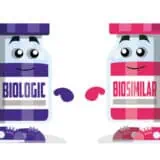
The Evolving Age of Biosimilars

Written by: CDHF
Updated: July 17th, 2025
Reviewed by Dr. Frank Hoentjen, MD PhD Professor of Medicine Director Inflammatory Bowel Disease Center
In recent years, the availability of biosimilars has played a significant role in increasing access to biologic treatments, including those for inflammatory diseases such as, Crohn’s disease, ulcerative colitis, and rheumatoid arthritis.
Biosimilars are biologic medications that are highly similar to the originator biologic in terms of structure, function, efficacy, and safety even though they may have slight differences due to the inherent complexity of biologic products.
Regulatory bodies like Health Canada, the U.S. Food and Drug Administration (FDA) and the European Medicines Agency (EMA) require biosimilars to demonstrate similarity to the reference biologic in terms of clinical efficacy, safety, and immunogenicity (the ability to make an immune response).
Biosimilars and IBD
Being equivalent and less expensive versions of originator biologics, biosimilars offer expanding therapeutic approaches in the treatment of IBD. The reduced costs of biosimilars make IBD treatments more accessible to a wider range of patients, particularly those who may be limited by high drug prices. This increased and improved accessibility to biologic therapies contributes to the long-term sustainability of healthcare systems.

Understanding Biosimilar to Biosimilar Switching
As more biosimilars become available, patients are facing the situation of switching from one biosimilar to another. Multiple switches (transitions) between biosimilars of the same originator biologic are now a reality, and they are expected to become more common in the future as more biosimilars enter the market. Switching between two biosimilars of the same originator biologic is generally driven by affordability, formulary requirements, or the relocation/travel of the patient.
Current clinical data suggests that biosimilar-to-biosimilar switching is a safe and effective clinical practice, with no reduction in effectiveness or increase in adverse events. As of December 31st, 2023, 31 observational studies have been published, including a total of 6,081 patients who underwent a switch from one biosimilar to another biosimilar of the same originator biologic. Most studies evaluated infliximab.
Following the review of the current clinical data, the EMA and the FDA have both released statements supportive of switching from one biosimilar to another biosimilar of the same originator biologic, and that no differences are observed in efficacy, safety or immunogenicity following one or more switches.
The availability of this new efficacy and safety data together with the supportive statements from the EMA and the FDA re-confirm that biosimilar to biosimilar switching is an effective clinical practice, with no new safety concerns.
Patient Considerations When Switching Biosimilars
In some cases, a switch is a necessary treatment option. However, every switch comes with questions, concerns, and uncertainties. Patients need to discuss switching with their physician to fully understand the possible benefits and/or risks. Together they can decide if switching is appropriate for the patient’s current condition and circumstances.

Currently there are 25 biologic/biosimilars available in Canada for the treatment of IBD – Crohn’s Disease and ulcerative colitis, they are listed below.
Important Information for INFLECTRA patients:
- As of September 2025, Inflectra will no longer be available through Pfizer. It will be replaced with Ixifi, the latest versin of Infliximab,
- If you currently take Inflectra you can rest assure that you can safely transition to Ixifi and continue with your currently Patient Support Program.
- Inflectra is still available for patients wishing to stay on it. However, it is now made available by Celltrion by the name of Remdantry.
To review updated lists of biosimilar products, go to Health Canada’s product database.
| Originator biologic and it’s biosimilars | Crohn’s Disease Adult/Pediatric (A/P) | Ulcerative Colitis Adult/Pediatric (A/P) |
| Adalimumab | ||
| Humira® – Injection | A/P | A/P |
| Abrilada® – Injection | A/P | A/P |
| Amgevita® – Injection | A/P | A/P |
| Hadlima® – Injection | A/P | P |
| Hyrimoz® – Injection | A/P | A/P |
| Hulio® – Injection | A/P | A/P |
| Idacio® – Injection | A/P | A |
| Simlandi™ – Injection | A/P | A |
| Yuflyma™ – Injection | A/P | A |
| Infliximab | ||
| Remicade® – Infusion | A/P | A/P |
| Avsola™ – Infusion | A/P | A/P |
| Ixifi® – Infusion | A/P | A/P |
| Omvyence™ – Infusion | A/P | A/P |
| Remdantry™ – Infusion | A/P | A/P |
| Remsima™ SC – Injection | A/P | A |
| Renflexis™ – Infusion | A/P | A/P |
| Golimumab | ||
| Simponi® – Injection | A | |
| Mirikizumab | ||
| Omvoh™ – Injection/Infusion | A | |
| Risankizumab | ||
| Skyrizi® – Injection/Infusion | A | |
| Ustekinumab | ||
| Finlius® (formerly Stelara®) – Injection/Infusion | A | A |
| Jamteki® – Injection/Infusion | A | A |
| Otulfi® – Injection/Infusion | A | A |
| Steqeyma® – Injection/Infusion | A | A |
| Wezlana™ – Injection/Infusion | A | A |
| Vedolizumab | ||
| Entyvio® – Injection/Infusion | A | A |
Pediatric indications:
Indications for children vary depending on age, weight, severity of disease, and previous failure of other conventional and/or biologic treatments. Your discussions with your physician will establish the most appropriate treatment.
This list created May 2025 and may be subject to changes.
The Bottom Line
While biosimilars offer significant benefits, including cost savings and greater treatment access, switching from one biosimilar to another is a complex decision that requires careful evaluation of clinical, financial, and regulatory factors. Ongoing monitoring and communication between healthcare providers and patients is crucial for successful transitioning between biosimilars. Moving forward, real world evidence could offer better insight into biosimilar-to-biosimilar switching as biosimilar technology evolves; ultimately guiding clinical decisions for optimal patient outcomes in an age of biosimilars.
This article was made possible due to an unrestricted educational grant from Pfizer Canada.

References:
Additional Data in Expanded Patient Populations and New Indications Support the Practice of Biosimilar-to-Biosimilar Switching Hillel P Cohen
AJMC – The Center for Biosimilars
New Evidence Confirms Safe Biosimilar-to-Biosimilar Switching May 28, 2024
Switching from One Biosimilar to Another Biosimilar of the Same Reference Biologic: A Systematic Review of Studies Hillel P Cohen