Testing for Celiac Disease

Written by: Clive Jude Miranda, DO, MSc
Updated: July 20th, 2026
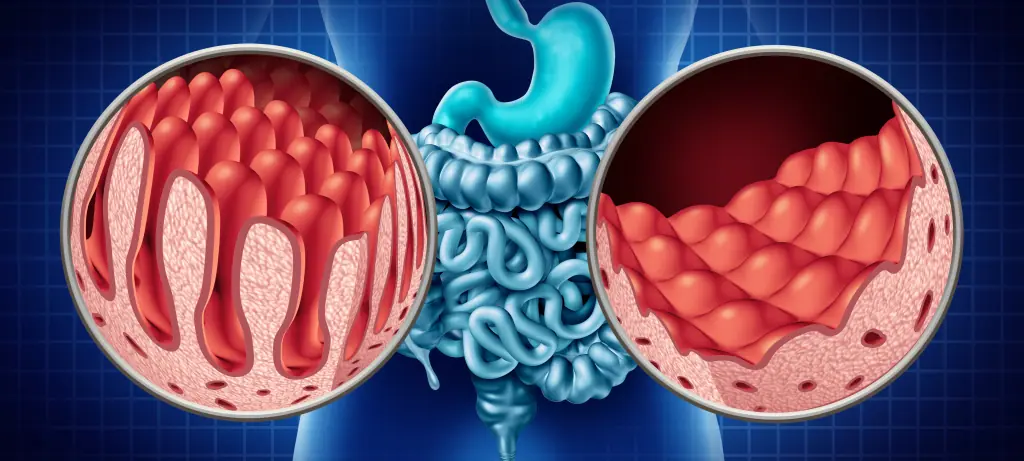
Celiac disease is an autoimmune condition where the body reacts negatively to gluten, a protein found in wheat, barley, and rye. It affects about 1 in 100 people worldwide, though roughly two-thirds of people remain undiagnosed. When someone with celiac disease eats gluten, it triggers an immune response that damages the small intestine. Over time, this damage can lead to malabsorption of nutrients, causing various health issues. [1-2]
There is a hereditary component to celiac disease. Those with a first-degree relative have an increased risk of developing the condition. In addition, celiac disease can manifest at any age and predisposes patients to an increased risk of other pathologies, including coronary artery disease, small bowel cancers, osteoporosis, epilepsy, obstetric complications and other autoimmune conditions such as type 1 diabetes mellitus and multiple sclerosis. [3] In this article we will discuss testing for celiac disease, and why it’s important.
Common Symptoms and Why Testing is Important
Symptoms vary widely, and some people might not have any noticeable symptoms at all. Up to 40% of people may have “silent” or non-obvious symptoms. Without testing, celiac disease can go undiagnosed for an average of 6 to 10 years, leading to irreversible damage.
Notable symptoms of celiac disease include [4-6]:
- Digestive problems (bloating, diarrhea, constipation)—reported by 70% of people with celiac disease.
- Fatigue and weakness—affects more than 50% of adults with the condition.
- Unexplained weight loss—experienced by around 30% of those diagnosed.
- Anemia (low iron levels)—present in nearly 50% of newly diagnosed cases.
- Bone or joint pain—experienced by 30-40% of people.
- Skin rash (dermatitis herpetiformis)—affects about 15-25% of those with celiac disease.
- In children: Delayed growth or puberty—common in up to 10% of pediatric cases.
Who Should Get Tested?
- First-degree relatives of someone diagnosed with celiac disease (parents, siblings, children) have a 1 in 10 chance of developing the condition.
- Individuals with type 1 diabetes or other autoimmune disorders are at higher risk.
- People experiencing persistent digestive issues, unexplained fatigue, or symptoms listed above should also consider testing.
- People with unexplained infertility, anemia, or early-onset osteoporosis might benefit from testing. This includes people with Down syndrome, Turner syndrome, Williams syndrome, and selective immunoglobulin A (IgA) deficiency. [5-6]
If you are already following a gluten-free diet, you should get tested before starting, as gluten needs to be in your system for the tests to be accurate. [6]
Types of Celiac Disease Tests
Blood Tests
This involves a simple blood draw, usually at your doctor’s office.
- tTG-IgA (tissue transglutaminase antibody test): The most common initial test. It has a sensitivity rate of over 95% for detecting celiac disease. [6-8]
- EMA (endomysial antibody test): Another highly specific test with an accuracy rate of 98-100%. [6-8]
- Total IgA: Ensures your immune system is producing enough antibodies for accurate results. Around 3-5% of people with celiac disease have an IgA deficiency, which can lead to false negatives. [6-8]
Genetic Testing
This involves a blood test or cheek swab to collect DNA.
- Looks for specific genes (HLA-DQ2 and HLA-DQ8) associated with celiac disease. Over 95% of those with celiac disease carry one of these genes. [6-8]
- Having these genes doesn’t mean you have celiac disease, but without them, celiac is very unlikely.
Biopsy
This is performed during an endoscopy—a procedure where a thin tube with a camera is passed through your mouth into your intestines.
- A small sample of the small intestine is taken (via endoscopy) to check for damage to the intestinal lining. This confirms the diagnosis if blood tests are positive.
If you suspect you may have celiac disease, speak with your doctor about testing.
References
1. Shah S, Akbari M, Vanga R, et al. Patient Perception of Treatment Burden is High in Celiac Disease Compared to Other Common Conditions. Am J Gastroenterol. 2014 Sept; 109(9): 1304-1311. doi: 10.1038/ajg.2014.29
2. Roy A, Minaya M, Monegro M, et al. Partner Burden: A Common Entity in Celiac Disease. Dig Dis Sci 61, 3451–3459 (2016). https://doi.org/10.1007/s10620-016-4175-5
3. Blood. 2007 Jan 15; 109(2): 412–421, Biomed Res Int. 2013; 2013: 127589, Expert Rev Gastroenterol Hepatol. 2010;4(6):767-780, PMC 2009; 55:349–365, Gut 49.4 (2001): 502-505, Ravelli, Lancet; 2007, 369(9563):767-78, Bai, et al. “World Gastroenterology Organization Practice Guidelines:.” World Gastroenterology Organization.
4. Al-Toma A, Volta U, Auricchio R, Castillejo G, Sanders D, Cellier C, Mulder CJ, Lundin KAE. European Society for the Study of Coeliac Disease (ESsCD) guideline for coeliac disease and other gluten-related disorders. United European Gastroenterol J. 2019. Doi: 10.1177/2050640619844125
5. Presutti, R. J., Cangemi, J. R., Cassidy, H. D., & Hill, D. A. (2007). Celiac disease. American family physician, 76(12), 1795-1802.
6. Lebwohl B, Sanders DS, Green PHR. Coeliac disease. Lancet. 2018;391(10115):70–81. doi:10.1016/S0140-6736(17)31796-8
7. Seehusen, D. A. (2017). Comparative Accuracy of Diagnostic Tests for Celiac Disease. American Family Physician, 95(11), 726–728. https://www.aafp.org/afp/2017/0601/p726.html
8. Clinician Summary: Diagnosis of Celiac Disease: Current State of the Evidence. Content last reviewed December 2019. Effective Health Care Program, Agency for Healthcare Research and Quality, Rockville, MD. https://effectivehealthcare.ahrq.gov/products/celiac-disease/clinician