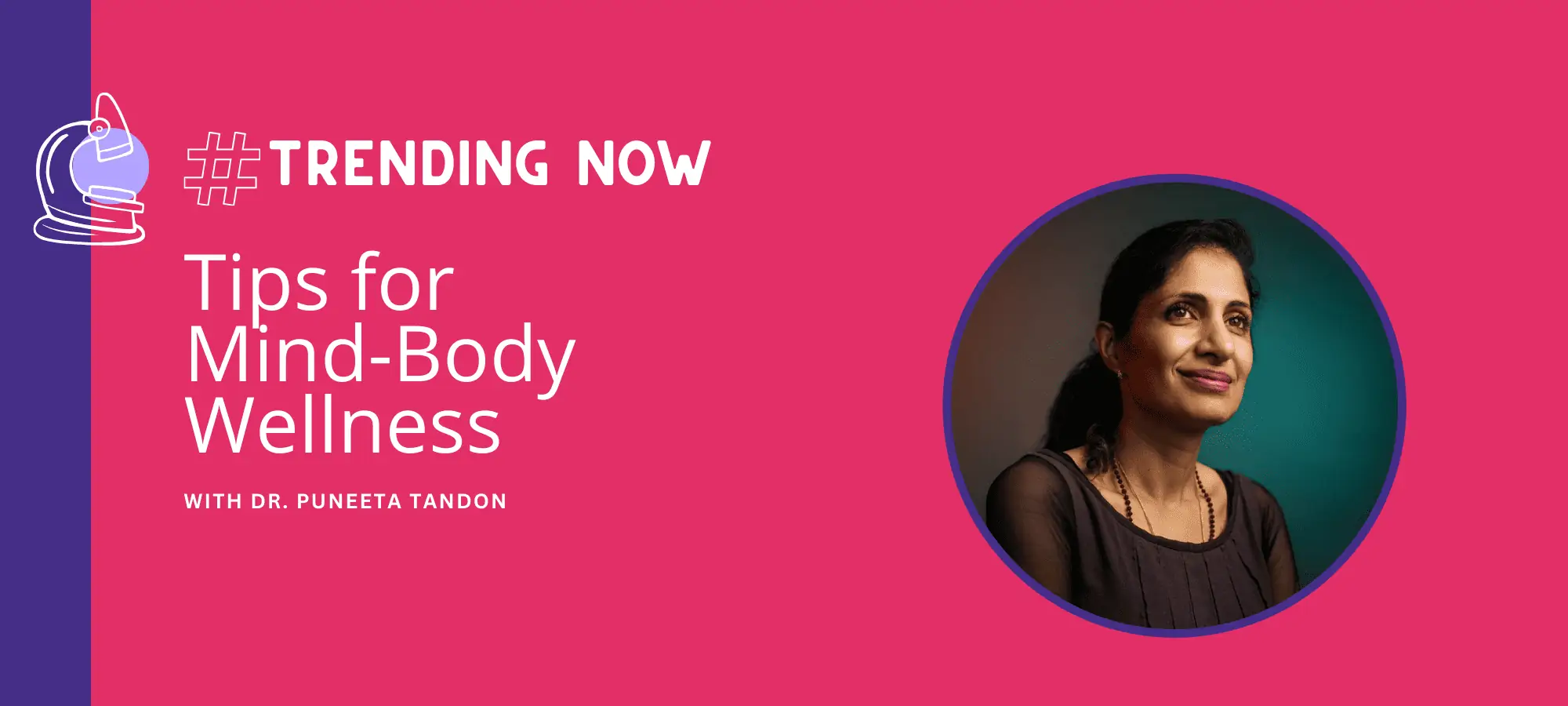
Tips for Mind-Body Wellness: Trending Now Presentation

Written by: CDHF
Updated: February 1st, 2024
This presentation was done as a part of CDHF’s 10th educational summit, #TrendingNow: Putting the Biggest Gut Health Trends Under the Microscope. Dr. Puneeta Tandon, MD, FRCP(C), MSc(Epi) discusses practical, science-based strategies to bring mind-body wellness into your life. To learn more, watch the full presentation below!
Learning Objectives:
- Understand Mind-Body Wellness
By the end of this talk, participants will gain an understanding of the intricate relationship between the mind and body, including the science behind mind-body wellness techniques. - Identify Practical Strategies for Mind-Body Wellness
Participants will learn practical and evidence-based techniques that can be integrated into their daily routines to promote mind-body wellness. These strategies will include mindful movement, breathwork, and more! - Apply Science-Based Tips to Enhance Personal Well-being
Upon completion of this talk, attendees will be equipped with actionable, science-backed tips and tools that they can implement in their lives to enhance mental and physical well-being. Also, participants will also learn about a 12-week online wellness program they can join to support the incorporation of these practices into their daily lives!
What is Well-Being?
Our social health, our physical health, our occupation, our psychological health and our finances all factor into well-being. Those living with chronic conditions may experience chronic disease distress. In fact, 6% of the general population has been diagnosed with depression, versus those with chronic diseases at 12-13%. As high as 50% of people with chronic diseases face distress.
What is the Fight or Flight Response?
The fight or flight response is when the body gets ready for action. During this time, your mouth may become dry, muscles may tense up, and your heart may pump faster. Additionally, you may experience fast and shallow breathing, and a release of stress hormones (cortisol), adrenaline, and Inflammatory cytokines.
Understanding Chronic Stress
Chronic stress is when emotional and physiological reactions occur where demands exceed our ability to cope. Having a chronic condition is a demand, along with other factors that are occuring in life, including work, bills, payments, fears, anxiety, and expectations.
Mind-Body Wellness Strategies
- Mindful movement: Yoga has been shown to reduce perceived stress and exhaustion levels. Movement can improve your posture, which positively affects memory recall and mood.
- Breathing practices: Belly breathing and breathing with sighs to activate the vagus nerve, and
- Guided meditation: Increases the volume of the prefrontal cortex (attention, working memory)
More on the EMPOWER Study
Are you 18+? Do you have access to the internet? Are you living with a chronic digestive disease?
A team of researchers led by Dr. Puneeta Tandon, developed an online program focused on movement, relaxation, and stress reduction. Each of the 12 weeks of the program contains two core components with science-based practices:
- Energize
- Weekly guided movement routines with breathwork and meditation integrated throughout
- Four different types of movement: Low Intensity Chair Exercise, Chair exercise, Standing Yoga, Advanced Yoga, or Tai Chi
- Weekly guided movement routines with breathwork and meditation integrated throughout
- Life Skills
- A Weekly ‘Tip from your care team’ A short video by clinical experts in digestive disease, nutrition or psychology
- Coping Skills Program – Weekly Psychology Tips
- Core concepts include Pacing, Sleep, finding out your Values & Goal Setting!
Within the program, participants will also find fun activities, games, and ways to feel connected to the study team and others in the program, including polls, a leaderboard, a virtual assistant & more!
About the Speaker
Dr. Puneeta Tandon (MD, FRCP(C), MSc(Epi)) is a Gastroenterologist, Transplant Hepatologist and Faculty member at the University of Alberta since 2007. She is an active researcher who is driven by the desire to empower people with chronic conditions with practical tools for improving knowledge, physical and mental well-being!