
What Nutrients Do Kids Need? A Parent’s Guide to Protein, Fibre, Calcium, Probiotics and More

Written by: Whitney Hussain, RD
Updated: November 10th, 2026
As a parent, nourishing your growing child can be challenging. Between keeping up with the latest nutrition trends for kids, navigating tricky food labels, and trying to make mealtimes simple yet nutritious, there’s a lot to consider.
This guide breaks down the nutrients for kids that matter most (including protein, calcium, iron, and fibre) and explains how each one plays a role in your child’s growth, energy and development. Bonus: We will dive into how your family can obtain these nutrients conveniently from everyday foods.
Why Do Kids Have Different Nutrition Needs?
Childhood is a time of rapid growth, so ensuring we are meeting children’s nutrient needs is essential. Compared to adults, children have higher caloric, protein and micronutrient needs per pound of body weight to allow proper development of their muscles, bones, brain and organs.
What Nutrients Do Kids Need?
While every nutrient plays an important role in the growth of children, there are a handful of key macronutrients, vitamins, and minerals to focus on.
Protein: For Growth and Repair
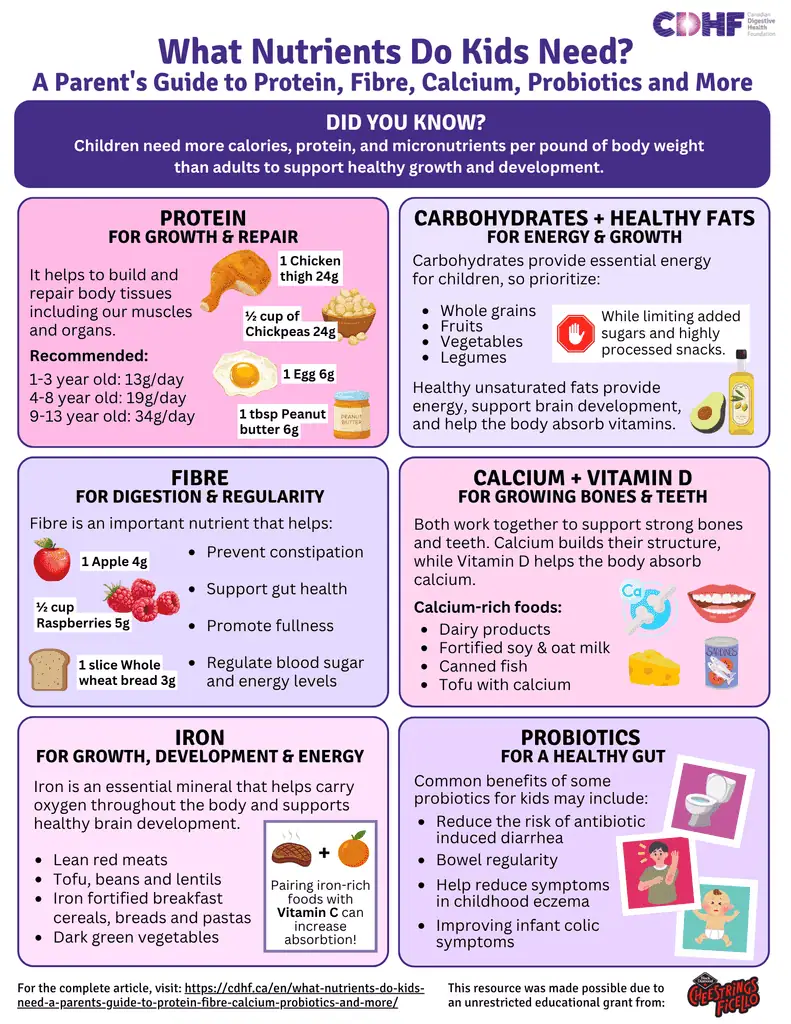
Protein is a macronutrient that helps to build and repair body tissues including our muscles and organs. Protein-rich foods also contain important minerals like iron, zinc, and vitamin B12.
Protein needs for children are lower than many caregivers may realize. Based on age:
- 1-3 year old: 13g per day
- 4-8 year old: 19g per day
- 9-13 year old: 34g per day
What does that protein for kids look like in common foods?
- Chicken thigh: 24g
- Chickpeas (½ cup): 9g
- Egg (1): 6g
- Extra firm tofu (½ of a 350g brick): 20-30g
- Peanut butter (1 tbsp): 5g
- Plain Greek yogurt (½ cup): 10g
- Whole grain bread (1 slice): 5-6g
Consider opting for lean sources of protein (e.g. poultry, fish and removing excess visible fats) and incorporating plant-based proteins (e.g. tofu, beans, lentils).
Carbohydrates: An Important Source of Energy
Carbohydrates are our body’s main source of energy. Carbohydrates also include fibre and sugars. Nutritious carbohydrate-rich foods to include in your child’s diet are:
- Whole grains (e.g. pastas, cereals, crackers)
- Starchy vegetables (e.g. potatoes, sweet potatoes, corn)
- Fruit
- Legumes (e.g. beans, lentils)
Foods and beverages with added sugars should be consumed as an occasional treat, aiming to limit added sugars to no more than 10% of a child’s total calories per day. This includes foods like sodas, sweetened drinks, and candies. Other occasional foods include highly processed carbohydrates, like chips or highly processed snack foods, since they can be high in sodium, saturated fat, and low in fibre.
Fibre: For Digestion and Regularity
Fibre is a type of carbohydrate found in plant foods that our body cannot digest. It is an important nutrient to:
- Prevent constipation
- Support a healthy gut
- Manage satiety and keeping a child’s belly full longer
- Help manage blood sugars and energy levels
Fibre needs for kids are:
- 1-3 year old: 19g per day
- 4-8 year old: 25g per day
- 9-13 year old: 26-31g per day
What does that fibre for kids look like in common foods?
- Apple (1 medium size): 4g
- Avocado (1 medium size): 7-8g
- Beans/legumes (½ cup): 5-9g
- Raspberries (½ cup): 5g
- Whole grain bread (1 slice): 3-4g
Healthy Fats: For Growth and Development
Fat is a macronutrient that provides energy which is important for absorption of fat-soluble vitamins (e.g. vitamin A, D, E and K) and is important for brain function. Fats come in 2 main types: saturated and unsaturated.
Healthy fats for kids are ideally in the form of unsaturated fats. Food high in unsaturated fats include:
- Avocados
- Fatty fish (e.g. sardines and salmon)
- Nuts and seeds
- Liquid oils (e.g. olive oil, avocado oil, vegetable oils)
A large consumption of saturated fats can have negative long term health impacts, like heart disease and high cholesterol. Sources of saturated fats are visible fat on meat, certain high fat dairy products (e.g. cream, butter), lard, shortening, palm oil and coconut oil. These are also often found in highly processed foods like baked goods or fried foods.
Calcium + Vitamin D: For Growing Bones and Teeth
Calcium and vitamin D work hand in hand to support bone health. Calcium makes up much of the structure of bones and teeth while vitamin D aids to absorb the calcium we consume.
Calcium needs for kids are:
- 1-3 year old: 700mg per day
- 4-8 year old: 1000mg per day
- 9-13 year old: 1300mg per day
Calcium for kids is commonly thought to come from dairy alone. But there are variety of foods that also contain calcium, including:
- Dairy products (e.g. cow’s milk, yogurt, cheese)
- Milk alternatives (e.g. calcium fortified soy milk and oat milk)
- Canned fish with soft bones (e.g. canned sardines and salmon)
- Tofu (with calcium)
Vitamin D for children between the age of 1-14 years old is 600IU per day. It is difficult to obtain enough vitamin D from our diet since very few foods naturally contain vitamin D. Although we can produce vitamin D through our skin, safe skin practices of wearing sunscreen and suboptimal strength of sun rays in many parts of Canada make it difficult to do this. It is recommended to supplement vitamin D 400IU to children in Canada and incorporate vitamin D fortified foods like fortified cow’s milk or plant-based milks.
Iron: For Growth, Development and Energy
Iron is an essential mineral that is a component of hemoglobin; a protein in red blood cells that transport oxygen to tissues in our body. It also supports healthy brain development. A child’s built-in iron store diminishes after the age of 6 months old and 1 in 10 children between the ages of 3-4 years old have low iron in Canada.
Iron for kids needs are:
- 1-3 year old: 7mg per day
- 4-8 year old: 10mg per day
- 9-13 year old: 8mg per day
Common iron-rich foods include:
- Lean red meats
- Tofu, beans and lentils
- Iron fortified breakfast cereals, breads and pastas
- Dark green vegetables
If you’re having troubles with your child’s iron levels, there are ways to help with absorption:
- Pairing iron-rich foods with vitamin C-rich fruits and vegetables, like bell peppers, oranges and broccoli
- Limit cow’s milk to 2 cups (500mL) per day since excessive milk intakes can inhibit iron absorption
Where Do Probiotics Fit Into Kids’ Nutrition?
Probiotics are beneficial microbes that can improve certain aspects of our health and wellness. But do kids need probiotics? It can be a useful nutrition tool, but it’s important to choose a particular probiotic strain that will help the specific health concern you are hoping to target. Common benefits of some probiotics for kids may include:
- Reduce the risk of antibiotic induced diarrhea
- Bowel regularity
- Help reduce symptoms in childhood eczema
- Improving infant colic symptoms
Be sure to check if the probiotic strain you choose also has research to support its use on children.
What Foods Can Contain Probiotics?
Fermented foods are a great nutrition add-on to meals, but not all of these foods have high amounts of good bacteria to be considered a probiotic. Kid-friendly probiotic foods include some:
- Yogurts
- Kefir
- Cheeses
Some fermented foods contain live microorganisms, but that doesn’t automatically make them probiotics. To be considered probiotic, the microorganisms should be identified and shown to provide a health benefit at an appropriate amount.
What Does a Nutritionally Balanced Day Look Like for a Child?
Here’s an example of some easy meal and snack ideas for a nutritious day of eating:
Breakfast:
- Hardboiled eggs with a whole grain bagel and strawberries
- Apple pancakes with nut/seed butter
- Oatmeal cooked in cow’s milk/soy milk and raspberries
Morning snack:
- Blueberries and whole grain cereal
- Cheese with whole wheat crackers and sliced oranges
Lunch:
- Whole wheat pita pizzas with vegetable toppings
- Bean and cheese quesadilla with carrots and celery
- Salmon sandwich with snap peas
Afternoon snack:
- Whole wheat English muffin with nut/seed butter
- Smoothie with frozen fruit and plain Greek yogurt
Dinner:
- Chicken stir fry with rice
- Tofu tacos with lettuce and tomatoes
- Bean chili with grated cheese and a whole grain bun
Bedtime snack:
- Cold cereal with cow’s milk/soy milk and banana
- Sliced cucumber and bell peppers with hummus
Does My Child Need Supplements?
If a child is eating a varied diet, a vitamin or mineral supplement is typically not needed. However, vitamin D supplementation is recommended as it is challenging to meet needs from food alone.
If your child has restricted eating patterns or does not enjoy certain foods (e.g. iron, calcium and omega-3 fatty acid- rich foods), it’s important to chat with your Primary Care Practitioner and Dietitian to determine if a supplement would be helpful.
Key Takeaways
Children have high nutrient needs relative to their small body size due to the rapid growth and development of their muscles, bones and brain.
Protein tends to be a popular nutrient to focus on, but a child’s needs are much lower than most caregivers may realize. Focusing on slow digesting carbohydrates, lean proteins and healthy fats may be more helpful to meet your kid’s macronutrients and calories.
Probiotics could be a useful option in your nutrition for kids toolbox, but be sure to choose a strain that can support the health concern you are targeting.
You can meet the majority of your child’s vitamins and minerals through food alone. Vitamin D may be the most difficult to obtain from their diet, so supplementing may be useful for Canadian kids.
FAQs
- What nutrients are commonly lacking in children’s diets?
- Vitamin D and fibre are common important nutrients for children lacking in their diet. Consider a vitamin D supplement and incorporating a variety of plant foods.
- Do kids need probiotics?
- Not all kids need a probiotic supplement, but a probiotic may be useful for children with particular health concerns including digestive issues and eczema.
- Do kids need a multivitamin every day?
- If a child is eating a varied diet, a multivitamin for kids is likely not required. Speak with your Primary Care Practitioner and Dietitian to check if a supplement would be useful for your child.
- Does my child need vitamin D every day?
- Yes, it is ideal for Canadian children to be taking a vitamin D supplement daily. Vitamin D-rich foods are limited, and it is difficult producing vitamin D through skin due to skin safety practices (e.g. using sunscreen) and suboptimal strength of sunrays in Canada.
References
- Alberta Health Services. Healthy infants: Key nutrients – Vitamin D [Fact sheet]. (2023). Available from: https://www.albertahealthservices.ca/assets/info/nutrition/if-nfs-ng-healthy-infants-key-nutrients-vitamin-d.pdf
- Canadian Digestive Health Foundation. High-fibre foods for kids: Easy, tasty ideas they’ll actually eat. (2026). Available from: https://cdhf.ca/en/high-fibre-foods-for-kids-easy-tasty-ideas-theyll-actually-eat/
- Canadian Digestive Health Foundation. Probiotics for kids. (2026). Available from: https://cdhf.ca/en/probiotics-for-kids/
- Canadian Paediatric Society. Healthy bones in children and youth. (2020). Available from: https://caringforkids.cps.ca/handouts/preteens-and-teens/healthy-bones-in-children-youth
- Graczykowska, K., Kaczmarek, J., Wilczyńska, D., Łoś-Rycharska, E., & Krogulska, A. (2021). The consequence of excessive consumption of cow’s milk: Protein-losing enteropathy with anasarca in the course of iron deficiency anemia—Case reports and a literature review. Nutrients, 13(3), Article 828. https://doi.org/10.3390/nu13030828
- Health Canada. Carbohydrates. Government of Canada. (2025). Available from: https://www.canada.ca/en/health-canada/services/nutrients/carbohydrates.html
- Health Canada. Considerations for children and adolescents. Government of Canada. (2026). Available from: https://www.canada.ca/en/health-canada/services/food-guide/explore/dietary-guidelines/applying/advice-nutrition-different-life-stages/considerations-children-adolescents.html
- Health Canada. Fats. Government of Canada. (2022). Available from: https://www.canada.ca/en/health-canada/services/nutrients/fats.html
- Health Canada. Iron: A powerhouse nutrient for health. Government of Canada. (2025). Available from: https://www.canada.ca/en/health-canada/services/publications/food-nutrition/iron-powerhouse-nutrient-health.html
- Health Canada. Protein. Government of Canada. (2025). Available from: https://www.canada.ca/en/health-canada/services/nutrients/protein.html
- Health Canada. Reference values for elements [Table 2]. Government of Canada. (2025). Available from: https://www.canada.ca/en/health-canada/services/food-nutrition/healthy-eating/dietary-reference-intakes/tables/reference-values-elements.html#tbl2
- Health Canada. Reference values for macronutrients [Table 1]. Government of Canada. (2025). Available from: https://www.canada.ca/en/health-canada/services/food-nutrition/healthy-eating/dietary-reference-intakes/tables/reference-values-macronutrients.html#tbl1
- Heart and Stroke Foundation of Canada. Fats and oils. Available from: https://www.heartandstroke.ca/healthy-living/healthy-eating/fats-and-oils
- HealthLink BC. Dietary fat and your health (HealthLinkBC File). (2025). Available from: https://www.healthlinkbc.ca/healthlinkbc-files/dietary-fat-and-your-health
- Korczak, R., Kamil, A., Fleige, L., Donovan, S. M., & Slavin, J. L. (2017). Dietary fiber and digestive health in children. Nutrition Reviews, 75(4), 241–259. https://doi.org/10.1093/nutrit/nuw068
- National Institutes of Health, Office of Dietary Supplements. Iron – Health professional fact sheet. (2025). Available from: https://ods.od.nih.gov/factsheets/Iron-HealthProfessional/
- Government of Canada. Do Canadian Children Meet Their Nutrient Requirements Through Food Intake Alone? (2020). Available from: https://www.canada.ca/en/health-canada/services/food-nutrition/food-nutrition-surveillance/health-nutrition-surveys/canadian-community-health-survey-cchs/canadian-children-meet-their-nutrient-requirements-through-food-intake-alone-health-canada-2012.html
- https://pubmed.ncbi.nlm.nih.gov/20542295/






Low FODMAP Diet: Dietitian Tips for Getting Enough Fibre


Low FODMAP Diet: The Traditional vs. Modified Approach



Low FODMAP Smoothie Options


High FODMAP Foods and Tips for Enjoying them with IBS

Understanding the Low FODMAP Diet: Foods, Phases and Tips for Managing IBS







The Important Role of Diet in IBS Management


Plant-Based Eating & the FODMAP Diet


Low FODMAP Fast-Food Meals