How to Know if Your Heartburn is Actually GERD

Written by: Jennifer House, MSc, RD
Updated: October 29th, 2025
Almost everyone has felt that burning sensation after a big meal at some point in their life. But when heartburn keeps showing up, it might be more than just something you ate.
GERD (Gastroesophageal Reflux Disease) is a more serious condition that often gets mistaken for occasional heartburn. Knowing the difference is important because untreated GERD can lead to long-term complications.
In this blog, you’ll learn how to tell regular heartburn apart from GERD, the signs to watch for, and what to do next.
Let’s dive in so you can take the right steps toward feeling better.
What Is Heartburn?
Heartburn feels like a burning pain in the chest, usually after eating or when lying down. Heartburn is a symptom of GERD, but it can also occur in isolation.
Certain foods may relax the lower esophageal sphincter, allowing stomach acid to enter back up into the esophagus. Common heartburn triggers include:
- Spicy or fatty foods
- Citrus or tomato-based dishes
- Caffeine, soda and alcohol
- Eating large meals
- Lying down after eating
Most people experience heartburn occasionally and can manage it with diet changes or over-the-counter medications.
What Is GERD and How Is It Different?
GERD stands for gastroesophageal reflux disease. It’s a chronic condition where acid from the stomach frequently flows back into the esophagus.
While occasional acid reflux or gastroesophageal reflux (GER) is common, GERD happens more often (at least twice a week). GERD causes more bothersome symptoms and complications that require medical attention.
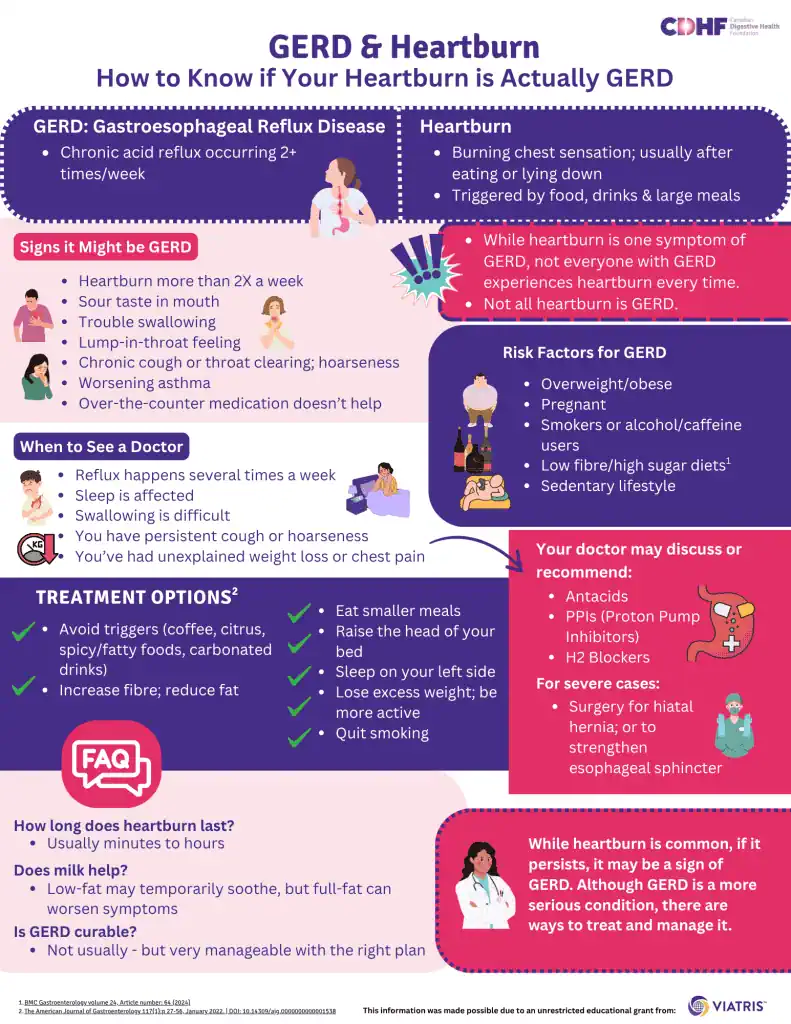
While heartburn is one symptom of GERD, not everyone with GERD experiences heartburn every time. And not all heartburn is GERD.
And it’s important to know if you have GERD, as it can lead to long-term health complications, like tooth erosion, sleep disorders, and an increased risk of developing Barrett’s Esophagus. This is inflammation of the esophagus, which may lead to esophageal cancer.
Signs That It Might Be GERD
So, how do you know if you’re experiencing GERD and not just ordinary heartburn?
Look for these signs:
- Heartburn more than twice a week
- Regurgitation (a sour taste in your mouth)
- Difficulty swallowing
- The feeling of a lump in your throat
- Chronic cough or throat clearing
- Hoarseness or sore throat
- Worsening asthma
- Over-the-counter medications for heartburn are no longer working
If you experience some of these symptoms, it’s time to make an appointment with a doctor and discuss the possibility of GERD.
Risk Factors for GERD
Some people are more likely to develop GERD than others. Common risk factors include:
- Being overweight or obese
- Smoking
- Being pregnant
- Eating late at night or lying down after meals
- Having a hiatal hernia
- Eating a low fibre, high sugar diet
- Being physically inactive
- Taking certain medications like NSAIDs or antibiotics
Managing these risk factors can help reduce GERD symptoms or prevent them from starting.
Diagnosis and When to See a Doctor
If your heartburn persists or gets worse, don’t wait – talk to your doctor. Catching GERD early and treating it can help prevent more serious issues down the line.
Seek medical help if:
- Reflux symptoms occur multiple times a week
- Symptoms are affecting how you sleep
- Over-the-counter heartburn treatments stop working
- You have trouble swallowing or have a persistent coughing
- You experience unexplained weight loss or chest pain
- Symptoms are leading to interrupted sleep
Your doctor may:
- Review your symptoms and medical history
- Recommend a trial of acid-reducing medication
- Refer you for tests like an upper endoscopy or pH monitoring
Treatment Options for GERD
The good news? GERD is very treatable. Treatment recommendations often include:
- Dietary changes:
- Avoiding personal dietary triggers. Common ones include coffee, chocolate, spicy foods, high-fat foods, carbonated beverages, and citrus fruits.
- Increasing dietary fibre intake
- Reducing fat intake
- Sleep modifications such as:
- Raising the head of your bed
- Sleeping on your left side
- Avoid eating 2-3 hours before bed
- Lifestyle changes such as:
- Weight loss
- Increased physical activity
- Over-the-counter antacids
- Prescription medications like PPIs (proton pump inhibitors), which decrease acid production
- In some cases, surgery may be necessary to repair a hiatal hernia (if present) or fortify the esophageal sphincter.
You also may want to try some alternative solutions, which do have some evidence supporting that they can work for some people with GERD:
- Diaphragmatic deep breathing
- Acupuncture
- Supplements such as probiotics, psyllium husk (fibre) or ginger
With the right plan, most people can effectively manage GERD and feel much better.
FAQs About Heartburn and GERD
Curious about heartburn and GERD? You’re not alone. Here are some of the most common questions people ask.
How long does heartburn last?
For many people, heartburn often goes away on its own or with over-the-counter remedies within a few minutes to a few hours. However, if heartburn happens frequently, it could be a sign of GERD.
Tip: If heartburn lasts more than two hours, happens more than twice a week or disrupts your sleep, check in with your doctor.
Does milk help heartburn?
Milk can offer quick, temporary relief for heartburn because it coats the esophagus.
However, the fat content in whole milk can actually trigger acid production, making symptoms worse for some people. So, low-fat milk may be a better option.
Remember: Everyone reacts differently, what helps one person might irritate another. It can be helpful to keep a diet and symptoms tracker to determine what your personal triggers may be.
Can stress cause heartburn?
Yes, stress can contribute to heartburn. While it doesn’t directly cause acid reflux, stress may:
- Trigger poor eating habits (like overeating or skipping meals)
- Slow digestion
- Increase stomach acid sensitivity
That’s why managing stress is a key part of long-term GERD symptom control.
Is GERD curable?
GERD isn’t usually “curable” in the traditional sense. But it is manageable, with the right combination of:
- Diet and lifestyle changes
- Medications
- In some cases, surgery
Working with your doctor can help you find the best approach for your body.
When should I be concerned about heartburn?
You should seek medical advice if:
- Reflux symptoms occur multiple times a week
- Symptoms are affecting how you sleep
- Over-the-counter heartburn treatments stop working
- You have trouble swallowing or have a persistent coughing
- You experience unexplained weight loss or chest pain
- Symptoms are leading to interrupted sleep
Persistent symptoms could indicate GERD or something more serious. Don’t ignore them.
Conclusion
While heartburn is common, if it persists, it may be a sign of GERD. Although GERD is a more serious condition, there are ways to treat and manage it.
Key takeaways:
- Occasional heartburn is normal, but symptoms twice or more per week could indicate GERD.
- Stress, food choices, and lifestyle habits all play a role.
- Talk to your doctor if symptoms affect your quality of life, as there are treatment options that can help.
We want to hear from you! Please take one minute to fill out our survey
This article was made possible through an unrestricted educational grant from Viatris.