
IBD in the Workplace

Written by: Beth Nanson, RD
Updated: July 28th, 2026
Inflammatory Bowel Disease (IBD) affects hundreds of thousands of Canadians—and that number is rising. While much of the conversation focuses on symptoms and treatment, one of the biggest day-to-day challenges for many people living with IBD is navigating work.
Whether you’re living with IBD yourself, supporting someone who is, or are an employer looking to better understand your team, this article focuses not just on what IBD is—but how to function, prepare, and thrive in the workplace with it.
What Is Inflammatory Bowel Disease (IBD)?
IBD is an umbrella term for chronic inflammatory conditions affecting the gastrointestinal (GI) tract. The two most common forms are Crohn’s disease and ulcerative colitis.
- Ulcerative colitis (UC): Affects the colon and rectum, involving continuous inflammation of the inner lining
- Crohn’s disease: Can affect any part of the GI tract and often occurs in patches, sometimes impacting deeper layers of the bowel
IBD is lifelong and currently has no cure—but it can be effectively managed with the right combination of treatment strategies.
In Canada:
- ~322,000 people live with IBD (~0.8% of the population)
- Rates are among the highest globally
- By 2035, that number is expected to reach ~470,000
IBD in the Workplace Videos
IBD Symptoms—Why Bowel Urgency Matters
Symptoms vary, but commonly include:
- Abdominal pain
- Chronic diarrhea
- Waking overnight to have a bowel movement
- Rectal bleeding
- Bloating & gas
- Unintentional weight loss
- Fever
- Fatigue
- Anemia
- Anxiety and depression
However, one of the most disruptive—and often under-discussed—symptoms is bowel urgency.
Bowel urgency is the sudden, immediate need to access a washroom, often with little warning. In a work setting, this can:
- Interrupt meetings or tasks
- Create anxiety about being away from a washroom
- Limit participation in certain roles or environments
- Lead to embarrassment or stigma
Because symptoms can fluctuate between flares and remission, the unpredictability adds another layer of stress—especially in structured work environments.
How Is IBD Treated? (Quick Overview)
While there is no cure for IBD, effective treatment strategies can help control inflammation, reduce symptoms, and maintain remission.
Treatment typically includes a combination of:
- Medications (such as anti-inflammatories, immunosuppressants, or biologics) to manage inflammation
- Nutrition strategies to support gut health, maintain nutrient intake, and reduce symptom triggers
- Lifestyle factors like stress management, sleep, and physical activity
- Supplements when nutrient deficiencies are present (e.g., iron, vitamin B12, vitamin D)
Treatment is highly individualized and often evolves over time. Working with a healthcare team—including a gastroenterologist and registered dietitian—can help ensure the best approach for both symptom control and long-term health.
Does Crohn’s or Colitis Affect a Person’s Ability to Work?
Short answer: it can—but it doesn’t have to define it.
Research shows IBD is associated with reduced productivity and increased absenteeism, but it doesn’t affect everyone the same way. Many people work full-time and perform at a high level, but may experience challenges such as:
- Needing frequent or urgent washroom access
- Fatigue impacting concentration and productivity
- Time off for medical appointments or flares
- Difficulty with rigid schedules or physically demanding roles
During flares, symptoms may temporarily limit work capacity. During remission, many people function with minimal disruption.
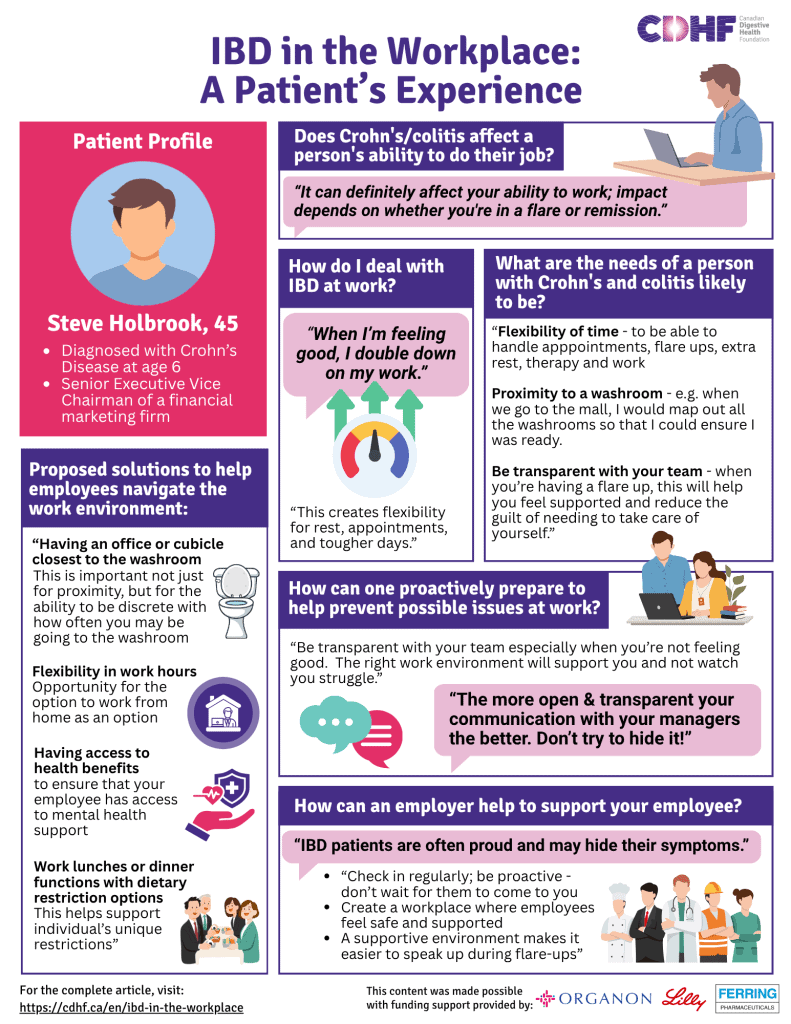
As Steve Holbrook, who lives with IBD, shares: “In my experience it can definitely affect your ability to work, but a lot depends on the season of flare-ups.”
The key issue is less about ability and more about whether the work environment allows flexibility and support.
What Are the Needs of Someone Living With IBD at Work?
While needs vary, there are some consistent themes. People living with IBD often benefit from:
- Predictable access to a washroom – for many, this is not just a preference but a constant consideration. Steve adds: “When we used to go to the mall, I would map out where all the washrooms were before going anywhere so I could be prepared.”
- Flexible scheduling (start times, breaks, remote options) Steve adds:“Flexibility of time – to be able to handle appointments, flare-ups, extra rest, therapy, and work.”
- Understanding during symptom flares
- Energy management support (especially with fatigue)
- Privacy and psychological safety (ability to work, live and socialize without fear of judgement or consequences due to unpredictable symptoms)
Equally important—but often overlooked—is the need for reduced stress and stigma. Stress and IBD are closely connected through the gut-brain axis, meaning emotional stress can influence digestive symptoms and symptom flares, while ongoing symptoms can also negatively impact mental health. Worrying about symptoms at work may therefore worsen symptoms, creating a cycle that impacts both health and performance.
How Do You Deal With IBD at Work? (Practical Strategies)
Managing IBD at work is about reducing unpredictability where possible and having a plan for when symptoms arise.
Helpful strategies include:
1. Know your patterns
- Track triggers (food, stress, sleep, workload)
- Identify early signs of a flare
2. Plan your environment
- Locate washrooms ahead of time
- Choose seating strategically (near exits when possible)
3. Build in flexibility
- Take regular breaks before urgency becomes severe
- Adjust your workload during lower-energy periods
4. Communicate (to your comfort level)
- Share only what’s necessary
- Focus on solutions (e.g., “I may need flexible breaks”) rather than details
5. Support your energy
- Prioritize consistent meals and hydration
- Plan snacks that are well tolerated
- Proactively manage workload to create flexibility in your schedule when time is needed for rest or medical appointments. Steve adds: “When I’m feeling good, I double down on my work. That creates space in my calendar so when I need rest or appointments, I know I have room for it.“
How Can You Proactively Prepare to Prevent Issues at Work?
Proactive planning can make a significant difference in both symptom control and confidence.
Consider creating a “workday IBD plan” that includes:
- Nutrition strategy:
- Identify “safe” meals and snacks for workdays
- Adjust intake depending on flare vs remission
- Emergency kit:
- Change of clothes
- Medications
- Wipes or hygiene products
- Schedule management:
- Avoid overloading high-stress days
- Plan buffer time between meetings
- Healthcare coordination:
- Keep up with medications and follow-ups
- Address symptoms early before they escalate
Being proactive doesn’t eliminate symptoms—but it reduces stress and increases control, which can improve overall outcomes. Steve emphasizes that communication is just as important as planning: “Be transparent with your team—especially when you’re not feeling well. They want to support you.” He adds: “The more open and transparent you are with your managers, the better. Don’t try to hide it.”
Navigating IBD in the Workplace
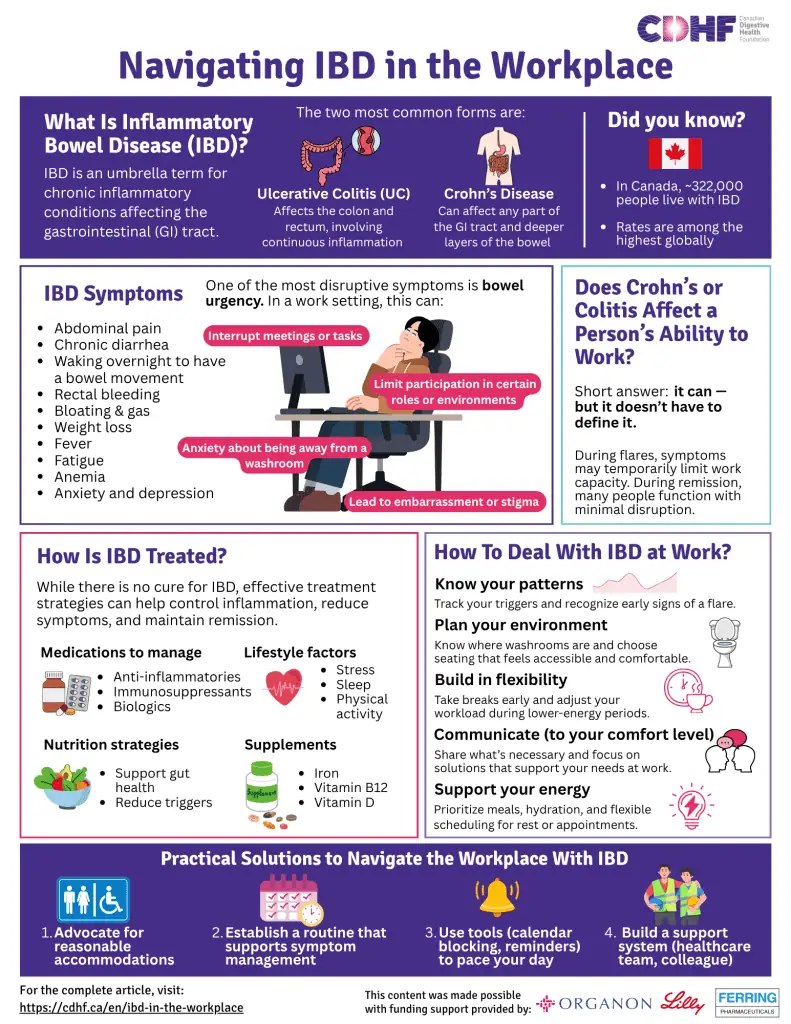
IBD in the Workplace: Supporting Employees
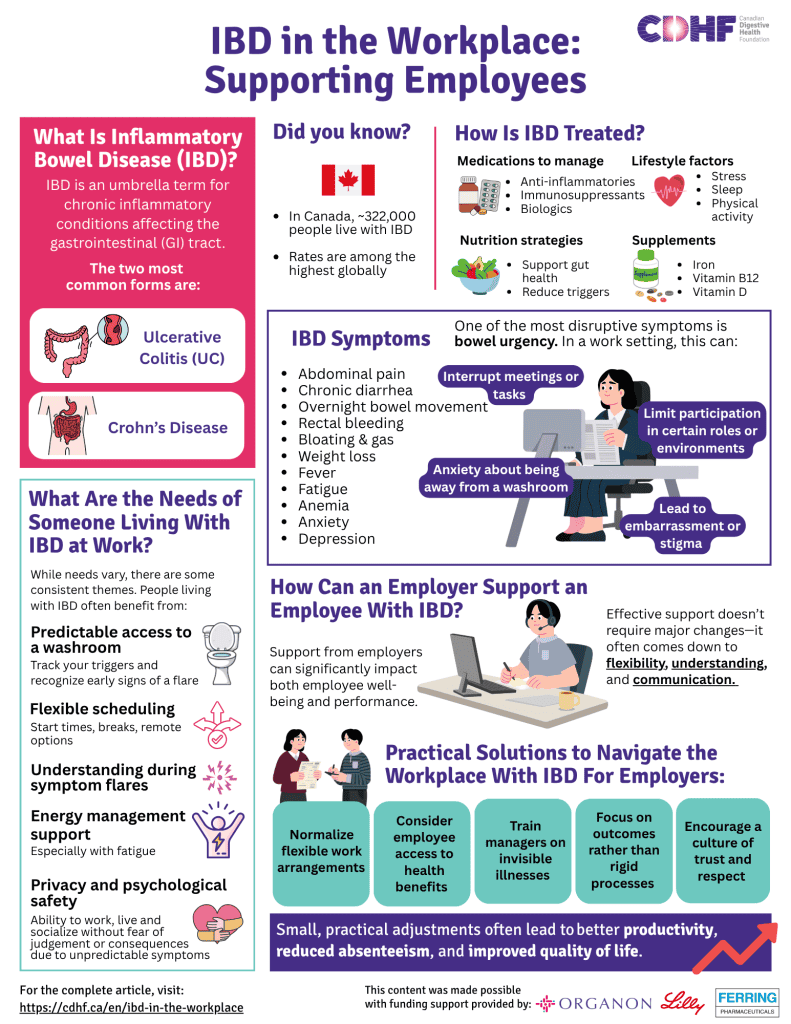
IBD in the Workplace: A Patient’s Experience
How Can an Employer Support an Employee With IBD?
Support from employers can significantly impact both employee well-being and performance.
Effective support doesn’t require major changes—it often comes down to flexibility, understanding, and communication.
Employers can help by:
- Offering flexible or remote work options
- Allowing unrestricted washroom access
- Supporting modified duties during flares
- Providing time off for medical care
- Creating a psychologically safe environment – From a patient perspective, support often starts with employers taking initiative. Steve explains:“Because people with IBD are proud and often hide their symptoms, the best thing you can do is check in and create an environment where they feel supported.” He adds: “That helps create a safe space where they can be open when things aren’t going well, rather than feeling like they have to come to you.”
Importantly, IBD is often an invisible illness—employees may look well even when they are struggling. Avoiding assumptions and encouraging open dialogue can make a meaningful difference.
Practical Solutions to Navigate the Workplace With IBD
Whether you’re an employee or employer, these solutions can help create a more manageable work environment:
For employees:
- Advocate for reasonable accommodations (e.g. having your work station close to a washroom)
- Advocacy and communication are key: As Steve notes: “Be transparent with your team—they want to support you.”
- Establish a routine that supports symptom management
- Use tools (calendar blocking, reminders) to pace your day
- Build a support system (healthcare team, trusted colleague)
For employers:
- Normalize flexible work arrangements
- Consider employee access to health benefits for mental health support
- Train managers on invisible illnesses (ie. CDHF’s Gut Health 101 Workplace Wellness)
- Focus on outcomes rather than rigid processes
- Encourage a culture of trust and respect
Small, practical adjustments often lead to better productivity, reduced absenteeism, and improved quality of life.
The Bottom Line
IBD is a complex, chronic condition—but it is manageable, including in the workplace.
While symptoms like bowel urgency, fatigue, and pain can create challenges, the right combination of:
- Medical care
- Lifestyle strategies
- Workplace accommodations
- Proactive planning
…can allow individuals with IBD to work, perform, and thrive.
This article was independently created, designed, and
implemented by CDHF with funding support provided by Ferring, Eli Lilly Canada Inc., and Organon Canada Inc.



References
- Benchimol, E. I., et al. (2023). The American Journal of Gastroenterology, 118(5), 871–882.
https://pmc.ncbi.nlm.nih.gov/articles/PMC10478802/ - Canadian Digestive Health Foundation. (n.d.). Gut health 101. https://cdhf.ca/en/gut-health101/
- Crohn’s & Colitis Canada. (n.d.). https://crohnsandcolitis.ca/About-Crohn-s-Colitis/Are-you-at-risk
- Crohn’s & Colitis Foundation. (n.d.). Employment and inflammatory bowel disease. https://www.crohnscolitisfoundation.org/sites/default/files/legacy/assets/pdfs/employment-and-inflammatory.pdf
- Crohn’s & Colitis Foundation. (n.d.). What is IBD? https://www.crohnscolitisfoundation.org/patientsandcaregivers/what-is-ibd
- Government of Canada. (2022). Inflammatory bowel disease. https://www.canada.ca/en/public-health/services/chronic-diseases/inflammatory-bowel-disease.html
- Government of Canada. (2022). The connection between gut, mood and behaviour. Canadian Digestive Health Foundation. https://cdhf.ca/en/the-connection-between-gut-mood-and-behaviour/
- Hopkins Medicine. (n.d.). Inflammatory bowel disease. https://www.hopkinsmedicine.org/health/conditions-and-diseases/inflammatory-bowel-disease
- Sewell, J. L., et al. (2023). Journal of Crohn’s and Colitis, 17(4), 445–458. https://pmc.ncbi.nlm.nih.gov/articles/PMC10445587/








Infliximab for the Treatment of Inflammatory Bowel Disease: An Overview of Drug History and Delivery