Does My Child Have IBS? Symptoms of IBS in Kids Explained

Written by: Novella Lui, RD
Updated: April 29th, 2026
If your child often complains of stomach aches, rushes to the bathroom, or struggles with unpredictable bowel habits, you’re not alone. You may wonder whether the symptoms are simply a sensitive stomach, a temporary bug, or something more chronic—like irritable bowel syndrome (IBS).
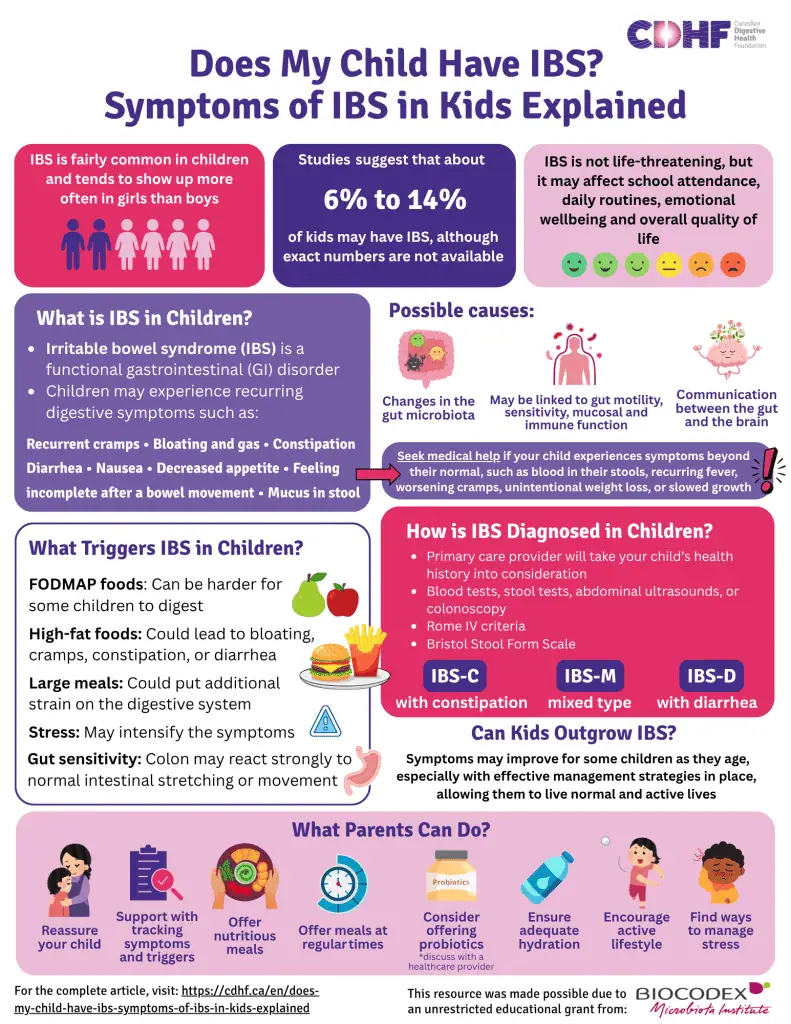
According to research, IBS is fairly common in children and tends to show up more often in girls than boys. Studies also suggest that about 6% to 14% of kids may have IBS, although we don’t have exact numbers yet.
While the condition is not life-threatening, it may affect school attendance, daily routines, emotional wellbeing, and overall quality of life. The encouraging news is that IBS is manageable.
With the right information and support, you can play a powerful role in supporting your child to feel better, regain confidence, and know when to seek help.
What Is IBS in Children?
Irritable bowel syndrome (IBS) is a functional gastrointestinal (GI) disorder. This means a child may experience recurring digestive symptoms—such as constipation, diarrhea, or abdominal pain—even though their digestive system appears normal on physical exams and routine tests.
IBS is different from inflammatory bowel disease (IBD), such as Crohn’s disease and ulcerative colitis. Unlike IBD, IBS does not cause intestinal inflammation, damage, or structural changes. Still, these symptoms may make your child feel uncomfortable.
Research suggests that IBS may be linked to a number of factors, such as:
- Gut motility (how fast or slow the gut moves)
- Gut sensitivity (some children may be more sensitive to gas passing through)
- Mucosal and immune function (the gut lining and the immune system may react differently, making the digestive system more reactive or irritated, even without an infection)
- Changes in the gut microbiota: The gut houses trillions of bacteria and microorganisms that help with digestion, immunity, and overall gut health. When the balance between the gut microbiome is off, symptoms may occur.
- The communication between the gut and the brain: The brain receives signals from the gut. In IBS, the brain may amplify normal gut sensations, making them more intense.
What Triggers IBS in Children?
Several factors may trigger the unpleasant symptoms of IBS, including:
- FODMAP-containing foods: Foods that contain FODMAPs (short-chain fermentable carbohydrates)—a type of short-chain carbohydrate—can be harder for some children to digest. When these foods reach the gut, bacteria break them down quickly, which can pull extra water into the intestines and create more gas. For kids with a sensitive tummy, this can lead to bloating and discomfort.
These foods include:- Vegetables with fructans, galactans, and polyols, such as onions, garlic, mushrooms, and brussels sprouts
- Fruits with high fructose, like apples, mangoes, and pears
- Dairy products such as milk, ice cream, and yogurt
- Grains, such as wheat, rye, and barley
- Legumes such as lentils and chickpeas
- High-fat foods: Foods high in fat may be associated with IBS symptoms. The reason is that fat could slow down or speed up digestion in those with a sensitive gut. Fat may also cause the gut to contract more, pushing the digested food content along the digestive tract. These functions could lead to bloating, cramps, constipation, or diarrhea for some children with a sensitive gut.
- Eating styles or patterns: Large meals could put additional strain on the digestive system, worsening IBS symptoms.
- Stress: While stress does not trigger IBS, it may intensify the symptoms. School pressure, social stress, or big life changes may amplify tummy pain or change bowel patterns.
- Gut sensitivity: Some children may have a colon that reacts strongly to normal intestinal stretching or movement, also known as visceral hypersensitivity.
Common Symptoms of IBS in Kids
IBS symptoms vary widely and may come and go. Different children may experience different symptoms. Some common symptoms may include:
- Recurrent cramps
- Bloating and gas
- Constipation
- Diarrhea
- Alternating between constipation and diarrhea
- Have the urge to have a bowel movement
- Feeling incomplete after having a bowel movement
- Mucus in the stool
- Nausea
- Decreased appetite
Symptoms may improve after a bowel movement, but they may return later. If the symptoms do not go away, connect with your child’s primary care provider to determine the root cause.
How IBS Is Diagnosed in Children
When diagnosing IBS in children, your primary care provider will take your child’s health history into consideration, including family history of IBS or other digestive conditions such as celiac disease and inflammatory bowel disease.
They may order blood tests, stool tests, abdominal ultrasounds, or colonoscopy to rule out inflammation, infection, and other conditions.
If your child’s tests return negative, your doctor may use the Rome IV criteria for diagnosing your child’s IBS, which involves questions about:
- Having abdominal pain for at least 4 days each month for at least two months
- Changes in how often they have bowel movements (stool frequency)
- Changes in the form of stools, such as being too hard or too watery (stool consistency)
- Pain and cramps even after pooping
Based on the above, the primary care provider may further categorize the child’s IBS diagnosis based on their stool pattern, using the Bristol Stool Form Scale:
- IBS-C (Irritable bowel syndrome with constipation): More than 25% of stools are described as small, hard, and round poops (Type 1) or lumpy-shaped poops (Type 2)
- IBS-D (Irritable bowel syndrome with diarrhea): More than 25% of stools are described as watery and mushy poop with ragged edges (Type 6) or watery poop with no solid matter (Type 7)
- IBS-M (Irritable bowel syndrome with mixed type): More than 25% of stools are types 1 and 2, and alternate with stools of Types 6 and 7
Your primary care provider may also ask about your child’s diet, eating patterns, recent life events that may have caused stress, changes in growth pattern, and body weight, as part of their assessment.
Can Kids Outgrow IBS?
While IBS is a functional disorder, where the gut appears normal and may function differently, the good news is that symptoms may improve for some children as they age, especially with effective management strategies in place, allowing them to live normal and active lives.
What Parents Can Do Next
While managing IBS in children may seem challenging, here are some non-medicated ways to support your children:
- Reassure your child: Let them know that while their symptoms are real, they are manageable and that they can continue to grow and develop normally.
- Support with tracking symptoms and triggers: Help your child start a symptom journal to identify foods that could worsen their symptoms, stressful events, and their bowel patterns.
- Offer nutritious meals: While a low-FODMAP diet may improve IBS symptoms in adults, research is still emerging among children. Offering nutritionally balanced meals and snacks is important for children’s growth and development. Consult with a registered dietitian to work with you on customizing a dietary plan that will meet your child’s nutritional and dietary needs.
- Offer meals at regular times: Research suggests that IBS prevalence may be higher among children who eat irregular meals than among those who follow a regular daily schedule.
- Consider offering probiotics: Probiotics may be promising for helping the gut’s “good bacteria” back into balance by keeping the harmful bacteria from growing too much, thereby improving IBS symptoms.
- Before giving probiotics to your child, talk to your doctor or a registered dietitian to find out if probiotics would be suitable and which probiotic strain may be beneficial to your child.
- Before giving probiotics to your child, talk to your doctor or a registered dietitian to find out if probiotics would be suitable and which probiotic strain may be beneficial to your child.
- Ensure adequate hydration: Adequate hydration throughout the day prevents dehydration and keeps stools soft and easy to pass.
- Encourage keeping their bodies active: Physical activity may lower stress levels, uplift mood, and improve IBS symptoms by improving gut motility and changing the gut microbiota.
- The Canadian Society for Exercise Physiology recommends that children between 5 and 11 years, and youth between 12 and 17 years, engage in at least 60 minutes of moderate to vigorous activity each day, along with bone-strengthening activities at least 3 times weekly.
- Since physical activity can vary in intensity, talk to your child’s primary care provider to find out what activities would be best for your child.
- Find ways to manage stress: Children experience stress just like adults do; they may show it through their complaints of IBS symptoms. Helping kids manage stress starts with creating a sense of safety and routine.
- Keeping a predictable daily schedule and building in quiet moments for rest may help with regulating emotions, thereby improving IBS symptoms over time. Teaching children about mindfulness, such as practicing deep breathing exercises, engaging in yoga, naming their feelings, and talking about what is bothering them, may help them feel more in control.
- Consider working with a psychologist on coping strategies, and with school support staff about bathroom access and accommodations.
When to Consult a Doctor
While your child may experience a range of IBS-related symptoms, there may be situations in which medical attention is necessary. Talk to your primary care provider if you notice your child has:
- Lost weight unintentionally
- Blood in stools
- Black or tarry stools
- Nighttime diarrhea
- Recurring vomiting
- Fever
- Cramps that have become more painful
- Slowed growth or delayed puberty
Ongoing communication with your child’s healthcare provider ensures your child’s symptoms are monitored and managed in the best way.
Final Thoughts
Caring for a child with IBS can feel overwhelming at times, especially when symptoms come and go without warning.
With patience, steady routines, and the right support, children can learn to manage their symptoms and thrive. Small, consistent steps – like offering nutritious meals, helping your child notice their triggers, encouraging movement, and supporting their emotional wellbeing – can make a meaningful difference.
And when questions or worries come up, staying connected with your child’s healthcare provider ensures you have a trusted partner along the way so that your child can feel better, gain confidence, and continue growing into their full potential.
Key Messages
- Irritable bowel syndrome can occur in children and appear as a group of symptoms, such as a combination of cramps, bloating, constipation, diarrhea, or alternating between constipation and diarrhea.
- Children with IBS can live a normal and active life when effective management strategies are in place, including offering reassurance to your child, tracking symptoms, offering nutritious meals, ensuring your child is adequately hydrated, encouraging regular movement, and managing stress.
- Look for medical help when your child experiences symptoms beyond their normal, such as blood in their stools, recurring fever, worsening cramps, unintentional weight loss, or slowed growth.
This resource was made possible due to an unrestricted educational grant from Biocodex Microbiota Institute

References
- Doğan, L. A., Gokdemir, O., & Özçakar, N. (2023). Frequency of irritable bowel syndrome among children aged 4 to 9 years: a Cross-Sectional study. Clinical Pediatrics, 63(8), 1089-1096. https://doi.org/10.1177/00099228231204455
- Vernon-Roberts, A., Alexander, I., & Day, A. S. (2021). Systematic Review of Pediatric Functional Gastrointestinal Disorders (Rome IV Criteria). Journal of Clinical Medicine, 10(21), 5087. https://doi.org/10.3390/jcm10215087
- Sarvepalli, S. S., Vemula, S. L., Aramadaka, S., Mannam, R., Narayanan, R. S., Bansal, A., & Yanamaladoddi, V. R. (2023). Digesting the Impact of Diet on Irritable Bowel Syndrome (IBS): Exploring solutions for controlling IBS. Cureus, 15(9), e45279. https://doi.org/10.7759/cureus.45279
- Chouliaras, G., Kondyli, C., Bouzios, I., Spyropoulos, N., Chrousos, G. P., & Roma-Giannikou, E. (2019). Dietary habits and abdominal pain-related functional gastrointestinal disorders: a school-based, cross-sectional analysis in Greek children and adolescents. Journal of Neurogastroenterology and Motility, 25(1), 113–122. https://doi.org/10.5056/jnm17113
- Jia, W., Liang, H., Wang, L., Sun, M., Xie, X., Gao, J., Li, L., Tang, X., & Ma, Y. (2022). Associations between Abnormal Eating Styles and Irritable Bowel Syndrome: A Cross-Sectional Study among Medical School Students. Nutrients, 14(14), 2828. https://doi.org/10.3390/nu14142828
- Pop, D., Man, S. C., & Farcău, D. (2025). Anxiety and Depression in Children with Irritable Bowel Syndrome—A Narrative Review. Diagnostics, 15(4), 433. https://doi.org/10.3390/diagnostics15040433
- Dudzińska, E., Grabrucker, A. M., Kwiatkowski, P., Sitarz, R., & Sienkiewicz, M. (2023). The importance of visceral hypersensitivity in Irritable Bowel Syndrome—Plant metabolites in IBS treatment. Pharmaceuticals, 16(10), 1405. https://doi.org/10.3390/ph16101405
- Hawa, K., Zaydan, K., & Andrewski, E. (2025). Pediatric Irritable bowel Syndrome: current understanding and future directions. Current Treatment Options in Pediatrics, 11(1). https://doi.org/10.1007/s40746-025-00339-3
- Bouhuys, M., Lexmond, W. S., & Van Rheenen, P. F. (2022). Pediatric inflammatory bowel disease. Pediatrics, 151(1). https://doi.org/10.1542/peds.2022-058037
- Shokouhi, N., Mohammadi, S., Ghanbari, Z., & Montazeri, A. (2022). Development of a new version of the Bristol Stool Form Scale: translation, content validity, face validity, and reliability of the Persian version. BMJ Open Gastroenterology, 9(1), e001017. https://doi.org/10.1136/bmjgast-2022-001017
- Hogervorst, E. M., Ganzevoort, I. N., Berger, M. Y., & Holtman, G. A. (2023). Irritable bowel syndrome in children with chronic gastrointestinal symptoms in primary care. Family Practice, 41(3), 292–298. https://doi.org/10.1093/fampra/cmad070
- Cai, L., Li, X., Cai, Q., Guo, S., Zhang, Y., Sun, W., Zhao, Z., & Hu, S. (2024). Irritable bowel syndrome in children: the placebo response rate and influencing factors a meta-analysis. Pediatric Research, 95(6), 1432–1440. https://doi.org/10.1038/s41390-023-02996-2
- Raja, S., Teitelbaum, J. E., Pereira, K., Guli, K., & Schosheim, A. (2025). Efficacy of low FODMAP diet in pediatric patients with disorders of gut–brain interaction. JPGN Reports, 6(2), 75–79. https://doi.org/10.1002/jpr3.12157
- Piccirillo, M., Renzi, E., De Vito, C., Mennini, M., Giarrusso, G., Gallo, G., Quatrale, G., Bianchi, M., Graziani, M., Caron, F., Ferretti, A., Parisi, P., & Di Nardo, G. (2025). Efficacy and Safety of Probiotics in Children with Irritable Bowel Syndrome: A Systematic Review and Meta-Analysis. Microorganisms, 14(1), 23. https://doi.org/10.3390/microorganisms14010023
- Panigrahi, M. K., Anirvan, P., Rath, M. M., & Sebastian, S. (2026). Nurturing gut health: A comprehensive framework. Indian Journal of Gastroenterology. https://doi.org/10.1007/s12664-025-01912-2
- Li, C., Li, J., Zhou, Q., Wang, C., Hu, J., & Liu, C. (2024). Effects of physical exercise on the microbiota in irritable bowel syndrome. Nutrients, 16(16), 2657. https://doi.org/10.3390/nu16162657
- Canadian Society for Exercise Physiology. (n.d.). Children & Youth 5-17 years – 24-Hour movement guidelines. https://csepguidelines.ca/guidelines/children-youth/
- Buffone, A., & Goldman, R. D. (2021). Cognitive-behavioural therapy for children with irritable bowel syndrome. Canadian Family Physician, 67(12), 905–907. https://doi.org/10.46747/cfp.6712905
- Rexwinkel, R., Vlieger, A. M., Saps, M., Tabbers, M. M., & Benninga, M. A. (2022). A therapeutic guide on pediatric irritable bowel syndrome and functional abdominal pain-not otherwise specified. European Journal of Pediatrics, 181(7), 2603–2617. https://doi.org/10.1007/s00431-022-04459-y
- McClellan, N., & Ahlawat, R. (2025, August 9). Functional abdominal pain in children. National Center for Biotechnology Information - StatPearls. https://www.ncbi.nlm.nih.gov/books/NBK537298/